Tuesday, 1 May 2012

The Pyrenees; Ordesa and Benasque

Ordesa and Benasque, june 2009

After an hour steep climbing in the forest, it is a relief
to get to the viewpoint of Valle de Ordesa
The national Park of Ordesa and Monte Perdido is probably the most spectacular part of the Pyrenees, situated around the highest peaks of the range in the region of Aragon. On this trip we had 2 days in Ordesa and one day in the Benasque-area.

Our point of departure was Torla, which I have used before for this area. From Torla, it is just 10 min drive to the entrance of the park, where you can choose different paths/senderos. We chose the route Faja de Pelay- a walk of about 7 hours. The first part of about an hour, is steep upwards in dense woodland. Then, it opens up and suddenly you are at near 2000 meter with a fantastic view over the canyon, with about 6-700 meter down to the valley bottom. The Ordesa valley is really Europe's Grand Canyon.

Cola de Caballo and Tres Sorores
You then follow the well marked path going along the southern side of the canyon, ending about where the waterfalls- Cola de Caballo- comes down from the Tres Sorores and Monte Perdido. These peaks are above 3.300 meters.

The detour is an easy walk in the valley bottom, where you end up again at the car park outside Torla. I would really recommend this route, you will not be disappointed. Especially if the weather is on your side. There was not very much birdlife when we were there, but last time I had both Lammergeier and Wallcreeper here. One species you will have for sure, is Citril Finch which was the most common along the path.

La Renclusa, a starting point for climbing the highest peaks
We then drove east towards Benasque, another hot spot of the high Pyrenees. We drove up to La Besurta and then we walked the short route up to La Renclusa- a mountain refuge which is a starting point if you would like to climb the highest peak of the Pyrenees, Pico Aneto. The natural park here is called Parque Natural Posets-Maladeta. We also drove the road over to the skiing resort of Cerler- a steep and curvy road however. From here you can take the ski-lift if it is open and if you are lucky, you might get Snow Finch at the top.

After the days in the high-Pyrenees, we drove down to the Costa Brava, having a relaxing time in Sitges, some 30 min south of El Prat airport, Barcelona.

More pictures here


Thursday, 15 October 2009

Andalucia birdwatching fair september 2009

Andalucia is surely one of the most active regions as to attract birdwatchers. The event we took part in was the 2nd birdwatching fair were the aim is to connect the Andalucian tourist industry with birdwatching trip operators. I think it were about 60-70 people attending from many birdwatching communities in many countries. The fair was held in the small village of Zahara de los Atunes. It was very well organised and in addition to give an overview of local providers of accomodation, transport and guiding it gave the participants accss to several of the most important sites in southern Andalucia. , We visited;

- Tarifa (Cazalla), Los Lances beach, La Janda, Laguna Medina, (close to Jerez), Zaframagon (near Olvera). Further, we moved into the Seville province, visiting Brazo del Este and then over to the Coto Donana area. We ended the trip at Aznalcázar, a key site for the Iberian Lynx.

I think the most important thing for us was to see and learn how Andalucia promotes itself within this niche of tourism. The region is probably already the most visited region in the whole of Europe, but they still see potential to increase their market share. 

It is obvious that birdwatching tourism is both good for business and conservation. The more birdwatchers that go (behaving as birdwatchers should), the more business is created and the more emphasis on conservation there will be.

Thank's to the Spanish tourism board for a very well organised fair!

The event took place in a rather pleasant hotel in Zahara...


Wednesday, 1 April 2009

Birding Southern Andalucia march 2009

Tarifa and Coto Donana 4th- 7th of March 2009


I arrived at Tarifa in very bad and stormy conditions, and stayed overnight there. At the 5th, I drove up to Laguna Medina and then up to El Rocio. On the 6th I was together with Jose Antonio Sanchez at Discovering Donana, and we covered most of Coto Donana during the day. In the evening I drove back towards Tarifa. On the 7th I did some birding along the strait before returning home via Malaga. A short and compact trip.

Some of the observations made:

Laguna Medina

Due to all the rain, it was completely full of water. Nevertheless, I had some very good observations of about 30 White-headed Ducks, several Red-crested Pochards and Shovelers. And, 5 Black-necked Grebes.

Coto Donana

The Laguna Madre at El Rocio was full of birds and I walked along the Paseo Marismeno. Flamingoes, Glossy Ibises, Spoonbills, Little- and Great White Egrets and hundreds of Shovelers, Pintails, Teals and Wigeons. Of waders, I especially noticed the number of Black-tailed Godwits.

On the 6th. we drove directly out of El Rocio towards The Valverde Visitor Center. On the way we had 3 Great Spotted Cuckoos, Little Owl, many waders like Green Sandpipers, Greenshanks, Lapwings, Little Stints, Dunlins, Kentish and Little Ringed Plovers. Just outside the Visitor Center, we had a Red-knobbed Coot; a lifer for me!


At the center there were many Little Gulls, egrets and herons, Red-Crested Pochards and also a male Hen Harrier. From here we went east along the road towards the rice fields. Not so much here, really, but we visited the nesting area of the Spanish Imperial Eagle, and could see one bird on the nest, very distant. From here, we went up to Dehesa de Abajo. That was a very pleasant experience. Hundreds of White Storks and Black Kites breed here, and most of them seemed to be there already. Further, we had 4 Red-knobbed Coots here, huge numbers of Purple Swamphens and several White-headed Ducks. We returned to El Rocio, and I drove down to Tarifa again in the evening.

Tarifa and the Strait


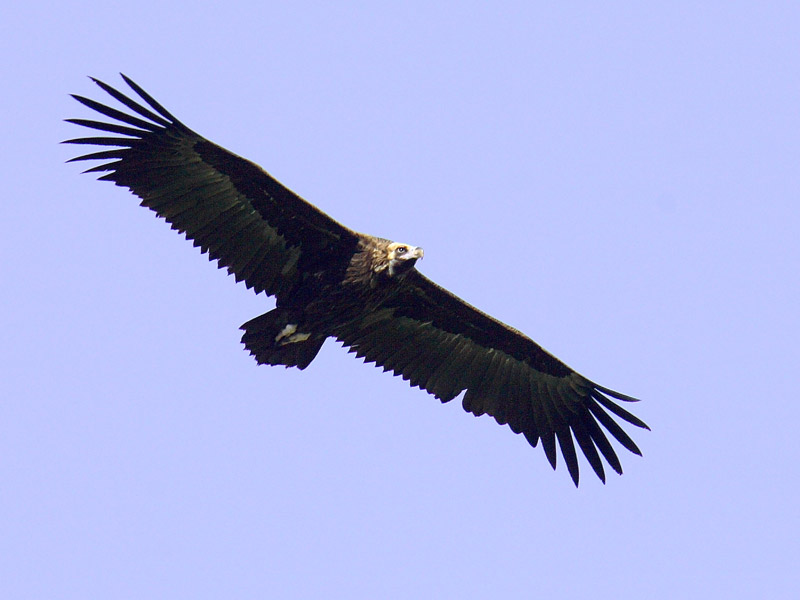
At the 7th of March, I spent the day driving slowly from Tarifa towards Algeciras to see if there were raptors coming in. It turned out to be a rather good day, all though the weather was rather unstable with quite hard westerly wind, so I focused on the eastern side of the strait. It was still a constant stream of Black Kites coming in from the sea with several flocks of 100+ birds. Further, I ended with about 40 Short-toed Eagles, one Booted Eagle, a Marsh Harrier, one Peregrine, 20 Griffons and in fact a Black Vulture.

Tuesday, 3 July 2007

First trip abroad for NOF Travel

Extremadura 19- 23. April 2007

Birding the steppes of Extremadura: Photo: Atle Qvale
We founded NOF travel- the travel agency for Norwegian Ornithological Society- in 2006. The first trip abroad went to Extremadura 2007. In fact, the interest was som big that we had to arrange two trips with just some weeks in between!

I was the guide for the first group of 16 persons, travelling to the promised land. We had 131 species in just three full days, including very good views of the Spanish Imperial Eagle.

The first day, we had the route Belen- Trujillo – Santa Marta de Magasca- Torrejon el Rubio. Already in the early morning pass, in the steppe of Belen just outside Trujillo, we had Little and Great Bustard, Great Spotted Cuckoo and Calandra Lark. 


Black Vulture. Phot: John Martin Mjelde
Just north of Trujillo we had our first stop; this gave three species of vultures, Bonelli's Eagle and lots of Spanish Sparrows. In the Santa Marta de Magasca area, we had 7-8 Montague's Harriers in a field and also a flock of 20 Black-bellied Sandgrouses. We ended our day up at Torrejon el Rubio where we stayed over-night. 

First stop next day was at the castle in Monfragüe. In my mind, a very good place for all photographers. If you stay here some hours, you will for sure get very close opportunities for pictures of griffons and other raptors. In front of Salto de Gitano, the famous cliff just beneath the castle, we had several species, including two Spanish Imperials having some mating-behaviour in the air. Magnificent! Later in the day, we had an even better view of an SIE, in full adult plumage.


Alpine Swift. Photo: John Martin Mjelde
Last day we visited one of the only wetlands of Extremadura; the Embalse de Arroyocampo at Almaraz (close to the nuclear plant). This is part of the dam created by water from both Rio Tietar and Tajo. We had several nice experiences like Little Bittern, Black-crowned Night Heron, Purple Heron and several species of warblers. 

The whole trip was a success, until we met the SAS-bureaucracy at Barajas Madrid. After 1,5 hours in a que to check-in, the two last persons were not allowed to check-in because they according to SAS were to late, and besides the plane was full. For us that had entered the plane, it was obvious that it was not full at all. The two remaining had to stay the night over in Madrid due to very bad service by the airliner.


Friday, 15 March 2002

Short trip-report from Western Spain November 2000


 I was in Madrid for a couple of days, and managed to get two days of birding in Extremadura. I spent the first night in Talavera (CM) and started from there early Saturday morning. I then drove up to Monfrague via La Bazagona. On the way I had 2-3 White Storks, which perhaps is not unusal these days, but I've not seen WS so late in Spain before. Then I drove up to Mirador de la Bascula. On the way I had several Black
Spanish Imperial Eagle, Monfrague
Vultures. Suddenly, just some hundred meters before the Mirador, I was aware of a very dark raptor sitting on a pole. And, yes, this was an Spanish Imperial Eagle. I managed to get out of the car, and it did not fly off until I was pretty close. An amazing sight. Further, I stopped frequently before arrival at Salto de Gitano. The usual stuff here, a Peregrine included. Just before I drove off, I had a flock of 6 Alpine Accentors. On the castillo I had a Golden Eagle were flying along the ridge.

From Torrejon el Rubio, I took the "inner way" to Trujillo via Santa Marta de Magasca. Here I saw the only Black-Winged Kite off the trip. Between Santa Marta and Trujillo I had at least two flocks of Black-Bellied Sandgrouse. The most common species in these areas were however Spotless Starling, Corn Bunting, Lapwing and Southern Grey Shrike. I also had several flocks of Rock Sparrow.

I spent the night in Trujillo, and went to visit Caceres the next day. After some hours in this nice town, I drove towards Trujillo, but took a side-road via Santa Marta again. On the way I spotted 6 Pin-Tailed Sandgrouses which landed in a field just in front of me. .However they flew off just after seconds. On this route, and the other steppe- and dehesa areas, Red Kite was the dominating raptor. I also had a few Kestrels and Buzzards and one or two Hen Harriers.

Then the rain started heavily, thus the best thng to do was to drive off towards Madrid.

A bit disappointing that no Cranes were seen. It would have been exciting to see them in their wintering-grounds, since these are so different from their breeding grounds in Norway. However, early November is perhaps to early for this species. At least this year with warm south-easterly winds dominating over Scandinavia from September almost to this day. Further, since I had very limited time, I could not stop frequently to scan the vast open areas for bustards. However, there were that many hunters out there so the bustards might have moved to real inaccessible areas anyway.

What to all these people hunt out there? Is it Red-legged Partridges, rabbits or even bustards?

Friday, 17 August 2001

A short trip-report from my visit to Northern – Spain 13. th- 18 th. May 2000

Itinerary

 14/5: Charter-trip Oslo-Alicante. Left my wife and kids by my parents. Took the night-train from Alicante to Zaragoza. 15/5: Hired a car in Zaragoza. Drove down to the steppe-reserve of Planeron. In the afternoon drove up to Riglos (de Mallos). Further up to San Juan de la Pena and to Jaca. Stayed in a hotel in Jaca. 16/5: Visit to the Citadell in Jaca. Then up through the Hecho-Valley and up to Gabardito. In the evening I drove to Ordesa and stayed overnight in Torla. 17/5: Walk in Parque Nacional de Ordesa. Then started the long journey towards Madrid.  Stayed overnight at a motel not far from Guadalajara. 18/5: Visit to a agricultural area near Alcala de Henares. Left the car at Barajas Airport, and took the train down to Alicante.

15/5 Planeron, Riglos de Mallos, San Juan de la Pena, Jaca

El Planeron in the Ebro Valley of Aragaon
At Planeron, I found the place overlooking the area, mentioned in Croziers book. Here, there were signs and information on the wildife. However, I did not find the reservoirs where the sandgrouses should come in to drink. Later, though, I drove back towards Belchite and took a farm-track which passed by some overgrown pools where I saw some Black-winged stilts. Perhaps this was the place?

Mallos de Riglos
I had around 10 Black-bellied Sandgrouses but no Pin-tailed. I saw all the larks in the area, including Dupont’s. (lots of Calandra’s , Lesser short-toed- and Short-toed) I could see 2-3 of the Dupont’s larks, and a few also sung in the middle of the day! In Norway this species is called ”Nightlark”, but this cannot be the whole truth! I also had a Stone Curlew, some Quails and some Spectacled Warblers.

Planeron was a very interesting area, and I would like to revisit. Perhaps a bit earlier in the morning!

I drove north through Huesca, on the way to Jaca. I stopped near Riglos and watched the huge cliffs. One Short-toed Eagle flew over and a couple of Booted Eagles also. Lots of Griffons were soaring, together with app. 10 Black Kites and 5 Red Kites. It was here I had the only Orphean Warblers on the trip.

Rock Sparrow
I drove up to San Juan de la Pena to the Monastery. I walked through the wood and got a stunning view over the Pyrenees. From here I saw my first Lammergeier- but at a great distance. Here, I also had the only Honey Buzzard. Smaller birds included Firecrest.


16/5 Jaca, Hecho Valley, Ordesa

Before leaving Jaca, I visited the Citadell. This place is supposed to be a good site for Rock Sparrow- and it is. Perhaps the most common species around the stone walls!

Ordesa National Park, seen from Torla
I drove up through the lovely Hecho Valley. Lots of kites in these areas! First stop the famous Boca del Infierno- the tunnel. My aim was to get the Wallcreepers here. Just after 15 minutes, a pair suddenly arrived. I great experience! (here I also found a Wild Boar in the middle of the road). I then turned back and headed for the Gabardito cross-country resort. Here again, lots of Griffons. One or two Lammergeiers also, and a pair of Egyptian Vultures. Gabardito is mentioned in some trip-reports to be a reliable site for Citril Finch. However, they were not here. I walked up from Gabardito, and reached the alpine meadows. Water pipits, and a Black Wheatear were the best on the ”small front”. However, I found the Choughs and Alpine Choughs most interesting. Not easy to separate in distance, but they have very different sounds. On one of the slopes I also saw some Spanish Ibex.

I then returned through Jaca and headed for Ordesa. Just before Jaca, I had app. 150 Griffons soaring together. The Griffon Vulture seems to be really numerous in this area. Perhaps the highest density in Spain?

I found a hotel in Torla, and took a quick evening trip into Ordesa. I had a Sparrowhawk, a Peregrine and a Golden Eagle from the Information Centre. In this area, I also saw lots of species which are more common further north in Europe, but have their stronghold in Spain here. (tits, finches, dunnocks, thrushes, pigeons..)

17/5  Ordesa, (and drive southwards)

A bit rainy this day. I climbed the steep Senda de las Cazadores on the right side of the river. On the way up, I found a dead Izard/Chamois. I also had two Wallcreepers on the way up. However, I did not make it all the way up. Because of the rain, I turned back to Torla. It then cleared again, and from my hotel I got the best views of Lammergeier on the trip. Two soaring together not far from the hotel, with dense flocks of Choughs/Alpine Choughs just below. I also heard a Black Woodpecker somewhere.

Alpine Chough
I then drove back, and drove up through the Tena Valley and reached the high ground around the French border. A Lammergeier here too and Alpine Choughs pretty close. I also had Blue Rock Thrush and Black Redstarts are common here. Just around the border area I also had Marmots and a flock of Izards.

I drove back and visited the lovely Panticosa ”village”. A Lammergeier , a Black Wheatear, and very healthy waters... Then, the main trip was over, and I headed back. The car was to be delivered at Barrajas, Madrid, so I had lots of miles in front of me.


18/5 In the morning, I visited the area near Alcala de Henares, mentioned in de Juanas book. This area is supposed to hold bustards and sandgrouses. I first visited the church in the village of Meco, where there still are some Lesser Kestrels. Then I drove along a farm track north of the village. I had a lovely male Montague’s Harrier and a pair of Hen Harriers. The latter I have never seen in Spain before. But, do these areas have bustards? If I was on the right track, I cannot see how for instance Great Bustard can survive in such an agricultural area.


I left the car on the airport, and took the Talgo train down to Alicante.

Friday, 18 May 2001

Southern Andalucia 26/4-3/5 1997

I took a week of and jumped on a charter-flight to Malaga. Due to late departure, we arrived at Malaga Airport at midnight. I got my hired car though, and drove off towards Gibraltar. I managed to get one- or two hours of sleep before day-break, and then I drove out to the Punta Europa first, and later when raports started I went up to the GOHNS-house.
Most interesting observations this day were: 3 Egyptian Vulture, 2 Osprey, 20 Booted Eagle, 4 Short-toed Eagles, 6 Marsh Harrier, 100 Black Kite, 60 Honey Buzzard, 10 Sparrowhawk, 2-3 Kestrel/Lesser Kestrel, 2 Peregrine. Out on the sea I also had small numbers of Cory’s and Mediterreanean Shearwaters. I aimed of course at the Barbary Partridge, but couldn’t find it, although several helpful birdwatchers tried to guide me. This was of course a disappointment.

Next day I drove west to the Cadiz-province and chose to drive through the Ojen Valley. This was a beautiful valley. Almost no traffic (which is understandable, considering the standard of the road..). I should have spent the whole day here, but drove through at small speed instead. In the air there were of course raptors. Short-toed and several Booted Eagles. The first Griffon Vultures started to appear and I even had a Common Buzzard. In the wooded areas there were Bonneli’s and Melodious Warblers together with several Firecrests. Along the road I had species like Stonechats, Tawny Pipits , Thekla Larks and Cirl Buntings.

When the valley was finished, I headed for the La Janda area. I knew this area more or less was destroyed, but I had hoped for something else then what I experienced: A highly developed area with intensive farming and in addition thousands of tracks which meant that I did not find the remaining natural areas. The only interesting I noticed was the first White Storks, Little Egrets and Calandra Larks.

White-headed Duck at Laguna Medina
I then drove towards Laguna Salada. This is a small lake/pond were it can be possible to find the Crested Coot. However, it was not there but it was a real nice place anyway. A type of Garden of Eden among fields and roads. This part of Spain is really beginning to be “developed…”. In the laguna I had some 20-30 pairs of Black-necked Grebes, a little less of Little Grebes and a pair of Great Crested. Further, there were Pochards, Red-crested Pochards, some Gadwalls and at least one pair of the amazing White-headed Duck.

Then on the move again, towards Laguna Medina. This lake is/was a real hotspot, and was former known to host Crested Coots, Marbled- and White-headed Ducks. However, perhaps due to the drought in the mid-nineties, it had not recovered at the time. There were more or less the same species as in Laguna Salada, however I added Black Terns and Shoveler to the list.

On the 29/4 I went up to Brazo del Este. I had heared about Brazo del Este in advance, but did not expect to find such a good site. Although highly developed by farmers, it still hold lots of good stuff. The main problem is to find it, and I will assume that many have had problems with that. There were lots of White Stork, one or two Squacco Herons, about 10 Black-crowned- and some 8-10 Purple Herons. Further, 20 Little Egrets and about 10 Cattle Egrets. Among waders I had about 20 Kentish Plovers and some Black-winged Stilts. However, what amazed me was the number of Collared Pratincoles. I estimated app. 500. It might have been more or less, but they were really common here. I also found 2 Purple Gallinules and several Little Terns in the canals, and out on the fields I had several Gull-billed Terns. In these fields, Short-toed Larks was the most numerous.

I then drove north, through Sevilla, and turned south again for Matalascanas- and of course Coto Donana (Las Marismas). I found a nice hotel with a fantastic view over the floaded areas made by La Rocina. From my hotel-window I could easily see species like Flamingo, several species of marsh-terns, Spoonbill, Avocets, Black-tailed Godwits, Curlew sandpiper to mention a few.

Hotel Toruno in El Rocio
Azure-winged Magpie
In the evening, we walked the sandy road east of the town. Our aim was to find the Red-necked Nightjar. And we were rewarded; after some time we suddenly heard the unmistakable “katook-katook”, and one bird flew across the path. Later that evening, a nice Barn Owl flew over the table while we had dinner.

At the 30/4  I started around the La Rocina Information Centre. Azure-winged Magpies were common here. New trip-list species here were Kingfisher and Golden Oriole.

Later on the day, we tried to drive north, in order to be able to approach the eastern areas of the park from this direction. This was due to the fact that taking the sandy road east-wards from La Rocio was out of the question. However, we ended up almost stuck in the sand here also, so we more or less drove around in the northern parts without a final objective at all. In these areas we expanded the trip-list with Olivaceous Warbler, Spanish Sparrow (which is not common here at all) and Stone Curlew. Some sort of Glossy Starling was sitting on a bush just beside our car, but I flew away again soon. Since there are several species possible of this African family, we just had to tick
a whole family. I must also mention the number of 
Black Kites in these areas. They are just very, incredible numerous. Several thousands must breed in/near Donana.

At the 1/5 I decided to take the guided trip around the Park. Starting from El Acebuche. I had been warned, so I managed it without getting sick or angry. However, this is not a birdwatching trip! The coach drove as hell along the beaches of the Atlantic coast. Sanderlings and Slender-billed Gulls really had to fly for their life. Well, into the Park interior again, there were several very nice areas, and I also got the impression of the Marismas, the wetlands. There were huge, open wetlands, created by the Guadalquivir. However, as mentioned, we drove through at high speed with just short stops. Well, as mentioned this was not a trip for twitchers, but if you have the possibility, you should take it. I had several new species at the trip-list, in addtion to for instance Slender-billed Gull. Whimbrel, Lesser Black-backed Gull, Oystercatcher, Black-eared Wheatear, Great-spotted Cuckoo and several Red Kites were added.

In the evening, I left the Park and drove to get some mountain-species. I chose the Grazalema-area which seemed rather accessible. Here, I had much “common-stuff” like tits, woodpeckers, warblers etc. just before sunset.

Grazalema
On 2/5 I used the day in La Grazalema and Las Nieves. My main aim was to find the Rock Thrush, which in fact would be new to me. And I was rewarded already early that morning, with a stunning male singing from his outpost. During the day I got species like Black Wheatear, Rock Bunting, Crag Martin and Red-billed Chough. The first Dartford Warbler was also seen here. Near Zahara I had about 100 Griffons soaring.

Well, my time was beginning to be short, and I drove south-east towards the coast and found a reasonable hotel in one of the tourist-machines.


3/5 was departure-day. However,  I managed a small trip down to the mouth of the “Rio” Guadalhorce in Malaga. I got some new species on the trip-list here like Common and Sandwich Tern. Further, I had 2 Audouin’s Gulls and actually 2 Great Skuas! In fact, I also found Greylag Goose and Common Teal here, and hence understood that I was on my way home…