Showing posts with label Monfragüe. Show all posts

Tuesday, 3 July 2007

First trip abroad for NOF Travel

Extremadura 19- 23. April 2007

Birding the steppes of Extremadura: Photo: Atle Qvale
We founded NOF travel- the travel agency for Norwegian Ornithological Society- in 2006. The first trip abroad went to Extremadura 2007. In fact, the interest was som big that we had to arrange two trips with just some weeks in between!

I was the guide for the first group of 16 persons, travelling to the promised land. We had 131 species in just three full days, including very good views of the Spanish Imperial Eagle.

The first day, we had the route Belen- Trujillo – Santa Marta de Magasca- Torrejon el Rubio. Already in the early morning pass, in the steppe of Belen just outside Trujillo, we had Little and Great Bustard, Great Spotted Cuckoo and Calandra Lark. 
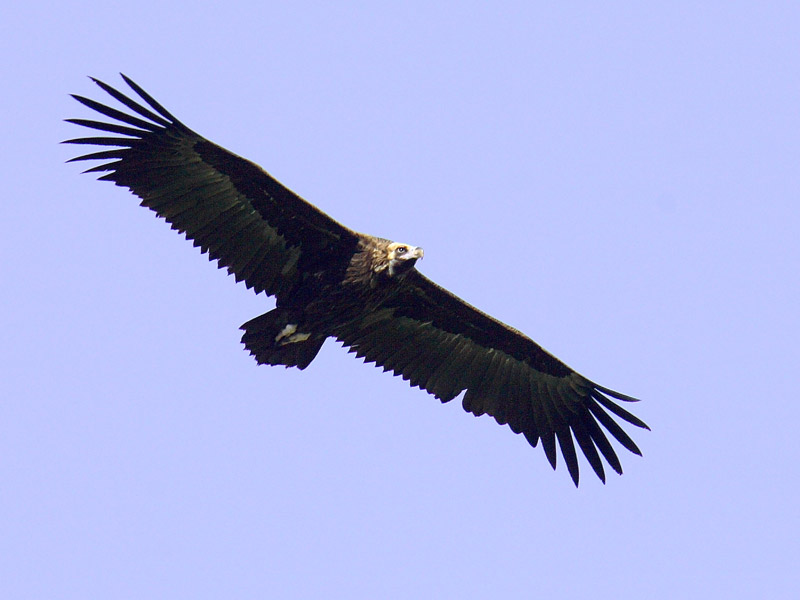

Black Vulture. Phot: John Martin Mjelde
Just north of Trujillo we had our first stop; this gave three species of vultures, Bonelli's Eagle and lots of Spanish Sparrows. In the Santa Marta de Magasca area, we had 7-8 Montague's Harriers in a field and also a flock of 20 Black-bellied Sandgrouses. We ended our day up at Torrejon el Rubio where we stayed over-night. 

First stop next day was at the castle in Monfragüe. In my mind, a very good place for all photographers. If you stay here some hours, you will for sure get very close opportunities for pictures of griffons and other raptors. In front of Salto de Gitano, the famous cliff just beneath the castle, we had several species, including two Spanish Imperials having some mating-behaviour in the air. Magnificent! Later in the day, we had an even better view of an SIE, in full adult plumage.


Alpine Swift. Photo: John Martin Mjelde
Last day we visited one of the only wetlands of Extremadura; the Embalse de Arroyocampo at Almaraz (close to the nuclear plant). This is part of the dam created by water from both Rio Tietar and Tajo. We had several nice experiences like Little Bittern, Black-crowned Night Heron, Purple Heron and several species of warblers. 

The whole trip was a success, until we met the SAS-bureaucracy at Barajas Madrid. After 1,5 hours in a que to check-in, the two last persons were not allowed to check-in because they according to SAS were to late, and besides the plane was full. For us that had entered the plane, it was obvious that it was not full at all. The two remaining had to stay the night over in Madrid due to very bad service by the airliner.


Friday, 15 March 2002

Short trip-report from Western Spain November 2000


 I was in Madrid for a couple of days, and managed to get two days of birding in Extremadura. I spent the first night in Talavera (CM) and started from there early Saturday morning. I then drove up to Monfrague via La Bazagona. On the way I had 2-3 White Storks, which perhaps is not unusal these days, but I've not seen WS so late in Spain before. Then I drove up to Mirador de la Bascula. On the way I had several Black
Spanish Imperial Eagle, Monfrague
Vultures. Suddenly, just some hundred meters before the Mirador, I was aware of a very dark raptor sitting on a pole. And, yes, this was an Spanish Imperial Eagle. I managed to get out of the car, and it did not fly off until I was pretty close. An amazing sight. Further, I stopped frequently before arrival at Salto de Gitano. The usual stuff here, a Peregrine included. Just before I drove off, I had a flock of 6 Alpine Accentors. On the castillo I had a Golden Eagle were flying along the ridge.

From Torrejon el Rubio, I took the "inner way" to Trujillo via Santa Marta de Magasca. Here I saw the only Black-Winged Kite off the trip. Between Santa Marta and Trujillo I had at least two flocks of Black-Bellied Sandgrouse. The most common species in these areas were however Spotless Starling, Corn Bunting, Lapwing and Southern Grey Shrike. I also had several flocks of Rock Sparrow.

I spent the night in Trujillo, and went to visit Caceres the next day. After some hours in this nice town, I drove towards Trujillo, but took a side-road via Santa Marta again. On the way I spotted 6 Pin-Tailed Sandgrouses which landed in a field just in front of me. .However they flew off just after seconds. On this route, and the other steppe- and dehesa areas, Red Kite was the dominating raptor. I also had a few Kestrels and Buzzards and one or two Hen Harriers.

Then the rain started heavily, thus the best thng to do was to drive off towards Madrid.

A bit disappointing that no Cranes were seen. It would have been exciting to see them in their wintering-grounds, since these are so different from their breeding grounds in Norway. However, early November is perhaps to early for this species. At least this year with warm south-easterly winds dominating over Scandinavia from September almost to this day. Further, since I had very limited time, I could not stop frequently to scan the vast open areas for bustards. However, there were that many hunters out there so the bustards might have moved to real inaccessible areas anyway.

What to all these people hunt out there? Is it Red-legged Partridges, rabbits or even bustards?