Showing posts with label Birding. Show all posts

Saturday, 31 March 2018

Huelva and Cadiz Provinces Easter 2018

Faro-Coto Donana-Tarifa round trip

As Faro is close to Coto Donana, we chose that airport rather than Malaga, which we always use when going to Andalucia. You will use about one hour to the Spanish border, and then you can start birding in the Huelva province straight away.

Our first stop was in El Rocio, the heart of Coto Donana. As I have been there several times before, it was quite easy to compare to previous trips. And the first impression was a rather full lagoon, with little birds. Of course, the usual stuff with flamingoes, White Storks, Glossy Ibises and Spoonbills. Of ducks, I noted Shovelers, Gadwalls and Teals.  But, it was few african migrants, meaning no warblers, pratincoles, marsh terns or Bee-eaters and few swallows and swifts. During the trip I spoke with a lot of people and all said the same thing. It is an extraordinary late spring. Some talk about a month late.

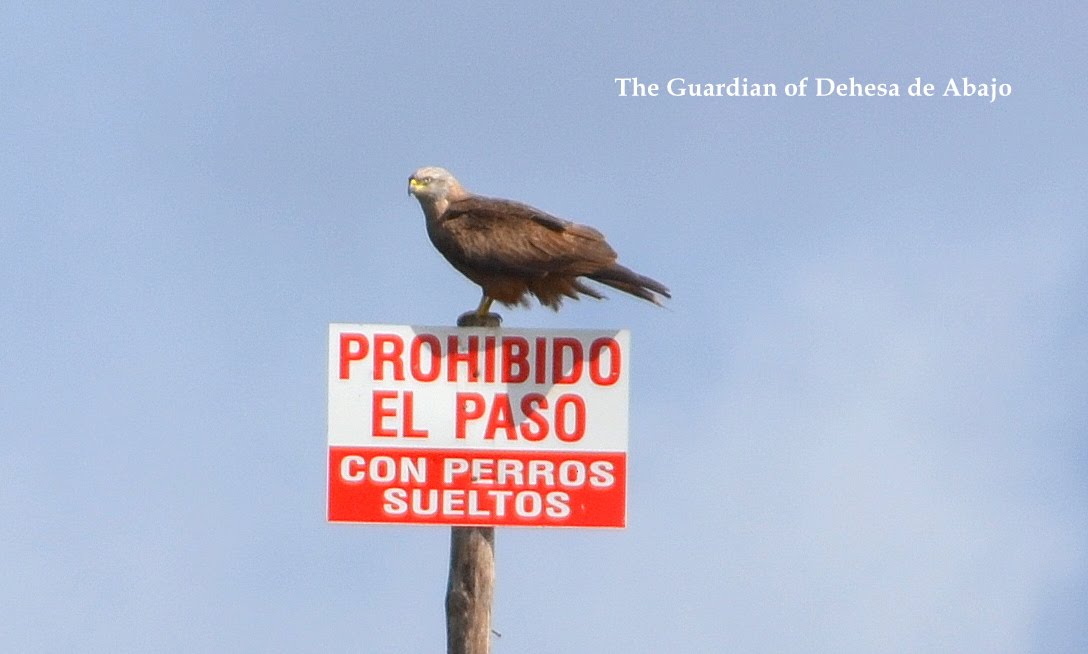
Anyway, after a night in El Rocio, we went up to Dehesa de Abajo. This is a really nice area. Perhaps a bit zoo-like, for some people, as the large populations of White Storks and Black kites breed so close and everywhere. But, that is the charm of this site. Further, the lagoon was full with water, and thus promising a good season for water birds. As it was rather windy, most of the water birds gathered on the opposite side, so identification was a bit difficult. We noted Red-crested Pochards rather close.

We then went down to Tarifa and spent three days there. As the whether had been rather poor for several weeks, I was expecting a massive migration over the Strait, since the whether now was improving. But that was not the case. Most probably, the constant north-western winds over a long periode would have halted the migration also well into Africa. Anyway, the raptor migration was going on all days. Staring a bit late, and continuing well into the evening. As the winds were mostly westerly, Punta Carnero was by far the best. Hundreds of Black Kites and Booted Eagles came in there. However also around Tarifa there was visible migration with White Storks, the occasional Black Stork, Booted Eagles, still some Short-toed and some 2-3 Montague's Harriers per days. One day up to 5 Egyptian Vultures also appeared. However, where were the hirundines, swifts and Bee-eaters?

Along Los Lances, I noted the first Northern Wheatear, Yellow Wagtails and Short-toed Larks. Also the usual masses of gulls including Audouins and Caspian Tern.

For the first time we also took a short trip to the rubbish dump at Los Barrios to look at the Black Kites and White Storks. Some say up to 2000 Black Kites have been spotted there at the same time. We had lots, but not that number...

On the detour we went back to Donana and stayed at a four star in Matalascanas. In Laguna Madre, I finally had about 15 Pratincoles, so at least some migrants were on the move. And as always, the Azure-winged Magpies in El Acebuche is worth a visit there.

At the last day, we visited an area I havent seen before, Isla Christina between Huelva and the border. The salt-pans there held the same birds as such areas everywhere; Avocets, Black-winged Stilts, Flamingoes and Slender-billed Gulls. In addition, there were some good flocks of waders, dominated by Dunlins and Common Ringed Plovers.

Some final words: Due to the whether conditions over Europe in March, a lot of rain has fallen in Southern Spain. This is very welcomed. Lagoons and marshes are quite full, and the same goes with the Embalsas. So even though the spring is late, the state of the wetlands of Andalucia gives hope for a good breeding season.

Monday, 25 December 2017

Birding Tarifa and the Cadiz Province, December 2017

Winter break in Southern Spain, 9th to 13th of December, 2018

I had a short break before Christmas, and what better to do than go to the Tarifa area, as so many times before. I stayed at the Hotel Dos Mares, also as many times before. The view from the front line bungalows there are simply stunning.

On Sunday the 10th, I had agreed with Yeray Seminario at Birding the strait to have a half day at La Janda to look for Spanish Imperial Eagle. And it was a success. We had at least three individuals, 2 adults and 1 immature. At the site for one of the adults, we also constantly had an immature Bonneli's Eagle in view. We also had three Black Storks, four Spoonbills, three Black-winged Kites, two Hen Harriers and some Red Kites. In La Janda, also about 500 Cranes, 300 Golden Plovers and quite a lot of other waders were wintering. In the evening, I walked along Los Lances, and had a nice flock of 17 Audouins Gulls.


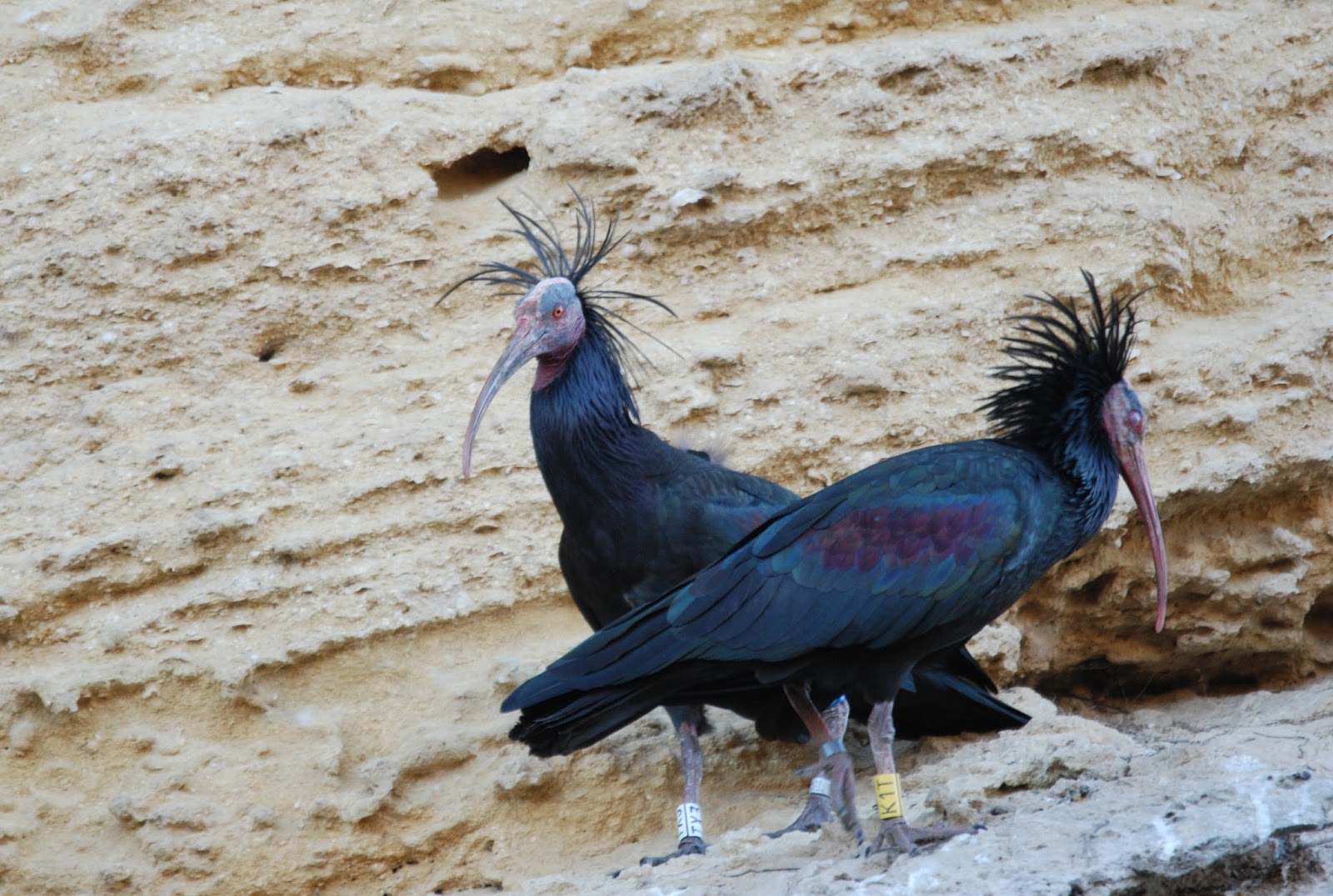
On Monday, it was quite stormy with rain, so I did some property search in stead. I managed a short visit to Palmones estuary, though. 1 Mediterranean Gull was the most interesting. On Tuesday, it had cleared up and I went up along the Costa de la Luz. First, I visited Barbate. There I had about 20 Stone Curlews and about 10 Bald Ibises. It is not far from the breeding 
site at Barca de la Vejer, so this is natural.I then drove up to Chipiona to look for Little Swifts, which in fact winter there. I had none, but a Caspian Tern and a Booted Eagle was ok. Next stop was the Bonanza Saltpans. Due to the rain the day before, I did not drive far into the area, but I drove enough to have Slender-billed Gulls and Flamingoes. Next stop was Laguna Tarelo. This is a very accessible and rewarding small lake, good in spring, autumn and winter. This time I saw Black-necked Grebe, 10 Shovelers, 15 White-headed Ducks, 40 Black-crowned Night Herons and one Little Swift.


By the way, when driving up to Chipona, I chose to go through El Puerto de Santa Maria. And there, in the middle of the round-about, with Burger King as the nearest neighbour- a replica of La Nina... what a place for this historic and world-famous Columbus ship!

On the way back, I encountered a circling flock of about 150 White Storks between Tarifa and La Janda. It might in fact have been the first arriving flock on "spring migration" as many leave Spain already in July and will start to return already in January- so why not December...?

Last day was a real mess, as I found out that I had a return ticket for 13th of February and not December..., so the best thing to do was to go to Malaga to sort things out.

More photos herehttps://photos.app.goo.gl/QX4NkaXn0jJHaOTi2


Friday, 14 April 2017

Castilla y Leon birding


Castilla y Leon: Spains biggest region with historic cities, "tierra del pan", spectacular landscapes and good birding.


Having visited most of Spains region, it was time to see more of the biggest region of Spain, Castilla y Leon, in the Easter of 2017. This is a highly agricultural intensive area, called "Tierra del Pan", meaning the bread land of Spain.

We started in Madrid, drove to Avila and spent the night there. Next day we went via Salamanca up to the border areas to Portugal, following the river Duero. We stayed overnight in Villalpando, which was a very good starting point for visiting the Villafafila area the next day. Villafafila is known for having the biggest population of Great Bustards in the world. Then, we went up to the scenic village of Sepulveda, which was a good point of departure for going to the Hoces del Duraton the next day. Last, but not least, we went down to Segovia and enjoyed the lovely parador there and did sightseeing in the historic city.


As for birding, I (who is the birdwatcher of us...) focused especially on two sites; Villafafila and Hoces del Duraton. Villafafila has the biggest population of the emblemic Great Bustard anywhere. I started in Vilalpando an hour before sunrise and drove out in the area. Even before sunrise, I could see the first great white "dots" out in the fields, and just a 1 km outside the village. As the light came, I could see single males and groups of females in most of the fields, just looking out of the car window. I guess I had at least 50 in just a couple of hours. As for the lagoons, the most important in this area of Spain, some of them were already dry. So the best was to go on the southern side of Laguna Grande. This was well worth a visit. The abandoned farm has a big Lesser Kestrel colony, Rock Sparrow was abundant, several Little owls were occuping the bird tower and in the fields several Short-eared Owls were hunting. In the lagoon, there were good numbers of Shovelers, Gadwalls, Teals, Wigeons, Black-winged stilts, Avocets, a flock of Spoonbills amongst others. To summarize my visit here: Well worth it!


The other area I wanted to see was the Parque Natural Hoces del Rio Duraton, the Grand Canyon of Castilla y Leon. This canyon has up to 100 meter cliffs and is a breeding site for numerous raptors. First and foremost up to 500 pairs of Griffon Vultures! We stayed in Sepulveda and drove to the small village of Villaseca, and walked the about 6km from there in to the Ermita de San Fruto, the monastery at the cliffs. All the spaniards going there were driving, but as we went early we had the dirt track for ourselves. And what a nice steppe area before approaching the canyon: I had Duponts Lark, Calandra Larks, Wood Larks, Thekla Larks, Tawny pipits, Black-eared Wheatears, Spectacled warbler etc etc. I can really recommend to walk this track in stead of driving which most birders would do. At the cliffs where the Ermita is situated, there were of course a lot of Griffons, a pair of Egyptian Vultures and a Peregrine. I would recommend to stay half-a-day in this area, focusin on the dry steppe at sunrise and stay at the cliffs to look fo raptors and Black Storks when the thermal is rising.


As mentioned earlier, the region of Castilla y Leon has several historic cities. We visited Avila with its famous city wall, Salamanca with is huge cathedral and famous Plaza Mayor and Segovia with it's huge aquaduct. These cities are also at a size which means you quickly can see the most interesting sites. These cities alo have their distinct bird community with Lesser Kestrels, White Storks, Blue Rock Trush and Alpine Choughs.

To summarize the visit to the huge region of Castilla y Leon: Very well worth a visit and also with a very good infrastructure for tourists: Good hotels (like the Paradores), very good food, good roads, abundance of both well known and hidden gems and do not forget the wine district of the Duero valley.

See more pictures here: 

Saturday, 10 December 2016

Coto Donana december 2016

Coto Donana december 2016

Laguna de las Madres, the mother of marshes, at El Rocio.

I have been to Coto Donana several times, but never in december. Donana has always been famous as a wintering quarter for Northern European birds, so it was about time to see the importance with my own eyes. And I was lucky. The area was teeming with birds. (except for, in fact, Laguna Madre seen on the photo above...).


Little owl
The main reason for seing birds everywhere, was the heavy rain that has been pouring down for the past week. The marshes has not been so wet for 6-7 years. It also meant, however, that several of the roads in the area were not driveable or even completly blocked by masses of water. It was no problem for me. The first day I drove on the dykes of the northern marshes, from Vilmanrique de la Condesa towards Isla Mayor. The second day I was together with José Antonio Sánchez from Discovering Donana, and we were able to go into the closed area between El Rocio and the Jose Antonio Valverde center, through Coto del Rey, Hijonos, La Vera and Lucio del Lobo.

On day one, in the northern marshes, I was struck by the total number of birds, including thousands of gulls, hundreds of white storks and glossy ibises, egrets and herons and large distant flocks of ducks. I was driving along the Brazo de la Torre/Entremuros on the western dyke. However, it was not possible to get over to the rice fields on the other side; the road to Isla Mayor was blocked by water. Due to the high water level, it meant that a lot of birds were sitting along or on the dyke. I had 4-5 Black-winged kites, sitting or flying next to my car as an example.


Floaded track in the Coto del Rey pine forest
Day two- with calm, sunny and warm weather, we drove from El Rocio and east towards the Valverde visitor center. On the way we had Iberian grey shrike, Little bustards, Pin-tailed sandgrouses, Stone curlews and lots of Greylag geese, cranes and white storks. The Valverde center gave little, except for some flamingoes. However, after the coffe break going further east, It got exciting again with five Short-eared owls, a Barn owl and totally 4 Little owls. On the raptor side, there were 20 or more Lesser kestrels, two Hen harriers, a lot of Marsh harriers and a wintering Short-toed Eagle. 


Little egret
To summarize, I can really recommend going to the Donana in december. I have been there three times earlier in the spring, and one in the autumn. But to enjoy it in winter is something special. Remember that the Coto Donana partly was protected after pressure from organisations like WWF, for its importance for wintering birds from Northern Europe. Let us hope it can stay that way. One little contribution can be to be a visitor in the "low season" of december and january. It is worth it!
More photos here

Thursday, 7 April 2016

Birding in the Cadiz province march-april 2016

Birdwatching from Dos Mares
We had the annual "spring tour" to Southern Andalucia, both too enjoy some migration over El Estrecho, but also to travel to new places in the Cadiz Province. However, we stayed in the Tarifa area, testing out several overnight possibilities, But as always, we concluded with: Hotel Dos Mares, with a sea view, is the real thing.

Coastal area of Tarifa, along the Colado de la Costa
I would not say it was an impressive migration these days. One day, while walking the newly opened route from Tarifa and west towards Algeciras, we had about 80 Booted Eagles coming in quite low over the sea. In addition, the call from Beeaters could be heard all along the route. 

There were also a good variety of breeders or stranded migrants here, like Iberian Chifchaff, Woodchat Shrike and Black-eared Wheatear.

We had several day trips out of Tarifa. One up to the Chipiona-Sanlucar-La Algaida area. Algaida forest is a very nice area. You can drive through, but I would say a walk along the paths is a good alternative, 

Bald Ibis at breeding site
Another trip we had was up to the Ojen Valley. I drove through here some 20 years ago, and it is still doable, but you need to take care. The road can be challenging, so also here a walk along the road could be an alternative. Last, but not least, we drove up to Arcos de la Frontera, one of the Pueblas Blancas, A nice place, but still, I would recommend Vejer de la Frontera. Another reason for going to Vejer, is of course the nearby colony of Bald Ibis. The only breeding place in Europe!

A couple of other things from the trip should also be mentioned. For the first time, we visited the roman ruins at Bolonia. A nice place, worth a visit. From here we also drove up to the Sierra de la Plata, and stayed under the Cueva del Moro for a while to see whether there were any swifts. Both White-rumped and Little Swift have bred here, but it was anyway to early for the first mentioned. Last, but not least, we enjoyed some good Black Kite migration the last day near Punta Carnero, where flocks came in low over the sea, in western gale and drizzle!
Black Kite at Punta Carnero, 4th of April, 2016

More pictures from the trip herehttps://goo.gl/photos/8pcuZpvAuYjd6kfD6

Wednesday, 4 November 2015

Birding in the province of Cadiz early september 2015

A friend of mine and myself had a four day trip for birdwatching in the Cadiz province. We hired car in Malaga and drove to the Tarifa area where we stayed at La Codorniz (The quail), where I have stayed several times before. Tarifa, the southern most tip of Europe, as such is nothing I would recommend for people seeking tranquility or cultural highlights. But the feeling of being close to Africa, the beaches and of course the bird migration makes it a hot spot for me. 
Raptor watching at Cazalla, Tarifa.

In addition to El Estrecho- Gibraltar, we had several day trips to other places in the province. One day we went all the way up to Sanlucar de Barrameda, situated at the southern bank of Rio Guadalquivir-the spine or nerve of Andalucia. We also went up to one of the casas blancas; Vejer de la Frontera. This white village situated on the top of the hill is always a nice place to visit. And, even better, down below at La Barca de Vejer, you now would find a breeding site for the very endangered Bald Ibis!

A trip to the Strait of Gibraltar this time of the year for a birdwatcher will however have one main reason; to enjoy the raptor and stork migration from Europe to Africa. 10ns of thousands of these species, migrating during the day and therefore highly visible, are flying over the about 15 km to Morocco before they then continue deep into the African continent. We had many Honey buzzards, Short-toed and Booted Eagles, Black- and White Storks. 
Estuary of Rio Guadalquivir at Sanlucar.
 Coto Donana on the other side

Some 30 min north of Tarifa, you will find the former wetland of La Janda, where many migrants rest before they take to the wings and fly south. All though not a wetland anymore- it was drained in the 60s, the channels and also some of the rice fields had quite a lot of water this september. Quite extraordinary, taking into account is has not rained for many months. We had one of the key species there, the Black-winged Kite and we also had many Montague's harriers.
Glossy Ibises at La Janda

It satyed very warm when we were there. For birding, it would have been better with colder conditions. We had a real shower though, when we were up in the Alcornocales searching for the White-rumped Swift. We did not find it this time either, but it just inspires to go back again for it and the many other birds to be found in this rather remote and different place of Europe.

If you would like to read more about this area, try the excellent website of Birding the Strait

Monday, 2 November 2015

Birding Aragon steppees and the Pyrenees

Aragon and the Pyrenees in May 2015

El Planeron on the steppes of Aragon. Foto: Odd Kindberg.
I was acting as a guide for a group of 12 Norwegians travelling with NOF Travel to the aragonese plains and the Pyrenees. We cooperated with Josele Saiz at Boletas Birwdwatching Centre. Josele is highly recommended if you need professional guiding in this part of Spain.

A good point of departure when going to Aragon and the high-Pyrenees is Barcelona. I have taken this route several times. By doing that, you can visit the steppes of Aragon, you can see Zaragoza and then head north for Los Pirineos. And, of course stay a day or two in Barcelona- and if you are very keen drive down to the Ebro Delta as well.

The aragonese part of the Pyrenees, perhaps together with the eastern part of Navarra, is the most interesting as for birding in the mountain range. On this tour we concentrated on steppe birding in the Belchite- El Planeron area, birding in the lower Pyrenees and finally up in the higher areas for some of the key species there. On the steppes, we got the key species like Dupont's Lark, Pin-tailed Sandgrouse and even a Great Bustard- one of the few remaining here.
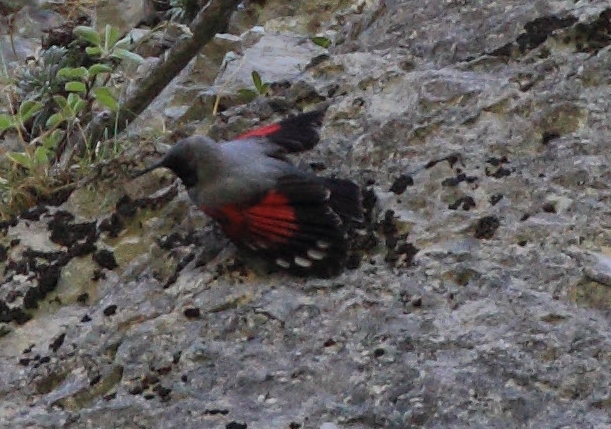
Yes, we found the Wallcreeper! Foto: Odd Kindberg 
In the Pyrenees, we stayed in the small town of Siresa, an excellent choice. It is situated in the Hecho Valley, where you can drive all the way up to Selva de Oza and also easy access up to Gabardito. As one of the star birds of the Pyrenees- the Wallcreeper no more breeds at Boca del Infierno, Gabardito is the most reliable place.

To get the one of the other star-birds of the Pyrenees, we went up the Roncal Valley, into the region of Navarra. Still into May, there were patches of snow here. We drove all the awy up to the French border, and started walking there. In this area, we had two other highlights; close contact with both Lammergeier and Alpine Accentor. The lammergeier had a marvellous show, dropping a bone to crush it on the rocks below. It was doing so several times on close range. Wow, what a show!

The lammergeier is a scavenger, a vulture, that you can find both in Asia and in Africa. But in Europe, however, they have been on the brink of extinction for decades. In Spain, they have been surviving in the Pyrenees, and they have also been re-introduced to other parts of Spain, like up in the Picos de Europa and also in Cazorla in the north-eastern corner of Andalucia. It is for sure one of the most charismatic species to be found, Huge, with up to 2,5 meter wing span, living in remote areas, often gliding along the ridges in the mountains, continously looking for dead animals or remains of it. It is the only bird that specializes in feeding on marrow, which it get's through dropping bones from the air on to rocks below.

You can see more pictures here:

Thursday, 24 October 2013

Andalucia september 2013

NOF Travel to Southern Andalucia 18.- 23.september 2013

Raptor watch at the Mirador del Estrecho
I was a guide for a group of 12 norwegian birdwatchers, organised by NOF Travel.  We cooperated with Plegadis v/ Sergio Gonzalez Asian. We had 156 species during the 6 days we spent there. The route was about the following; We arrived at Malaga, drove down to Tarifa and spent 3 days there. We then drove north up to Laguna Medina, Brazo del Este and to La Jantejuela. On day five we visited Zaframagon and Laguna la fuente Piedra. Finally, we had the last night up in the Antequera area, before departing from Malaga again

As for raptor migration, we had a good movement on the 19th both at our stop at the Mirador del Estrecho, between Algeciras and Tarifa, and from Cazalla. About 200 Booted- and 150 Short-toed Eagles. In addition there were Black Storks, Montague's harriers and some Egyptian Vultures. Highlight was however three Spanish Imperial Eagles that we could see from Cazalla. 

Short-toed Eagle migrating towards Africa. Photo: Per S.
On the  20th we visited both the Barbate marshes and La Janda. At Barbate we had a Black-winged Kite, 5 Stone Curlews and several Caspian terns. Later in the day we had many Glossy Ibises at La Janda, the first and only Collared Pratincole of the trip and in fact also a Little Swift.

On the 21st, we started in Laguna Medina and had the usual stuff there, including Purple Swamphen and Red-knobbed Coot. Brazo del Este was however a disappointment, with about 1000 Glossy Ibises as the most remarkable. La Janteuela was however more interesting. At the dams in one of the villages we had in fact another Red-knobbed Coot, and that was the first sighting here ever! Out on the steppes we had 11 Great Bustards, 12 Black-bellied Sandgrouses and another Black-winged Kite. We stayed overnight in Montellano.

Group photo at Laguna de fuenta Piedra.
On the 22nd, we walked through Zaframagon. Lot's of Griffons, another swift with white rump, Blue Rock Thrush and 2 Bonelli's Eagles. Last day we tried the mountain near Antequera, El Torcal. A nice area, but foggy conditions made the number of species quite thin.


Tuesday, 1 May 2012

The Pyrenees; Ordesa and Benasque

Ordesa and Benasque, june 2009

After an hour steep climbing in the forest, it is a relief
to get to the viewpoint of Valle de Ordesa
The national Park of Ordesa and Monte Perdido is probably the most spectacular part of the Pyrenees, situated around the highest peaks of the range in the region of Aragon. On this trip we had 2 days in Ordesa and one day in the Benasque-area.

Our point of departure was Torla, which I have used before for this area. From Torla, it is just 10 min drive to the entrance of the park, where you can choose different paths/senderos. We chose the route Faja de Pelay- a walk of about 7 hours. The first part of about an hour, is steep upwards in dense woodland. Then, it opens up and suddenly you are at near 2000 meter with a fantastic view over the canyon, with about 6-700 meter down to the valley bottom. The Ordesa valley is really Europe's Grand Canyon.

Cola de Caballo and Tres Sorores
You then follow the well marked path going along the southern side of the canyon, ending about where the waterfalls- Cola de Caballo- comes down from the Tres Sorores and Monte Perdido. These peaks are above 3.300 meters.

The detour is an easy walk in the valley bottom, where you end up again at the car park outside Torla. I would really recommend this route, you will not be disappointed. Especially if the weather is on your side. There was not very much birdlife when we were there, but last time I had both Lammergeier and Wallcreeper here. One species you will have for sure, is Citril Finch which was the most common along the path.

La Renclusa, a starting point for climbing the highest peaks
We then drove east towards Benasque, another hot spot of the high Pyrenees. We drove up to La Besurta and then we walked the short route up to La Renclusa- a mountain refuge which is a starting point if you would like to climb the highest peak of the Pyrenees, Pico Aneto. The natural park here is called Parque Natural Posets-Maladeta. We also drove the road over to the skiing resort of Cerler- a steep and curvy road however. From here you can take the ski-lift if it is open and if you are lucky, you might get Snow Finch at the top.

After the days in the high-Pyrenees, we drove down to the Costa Brava, having a relaxing time in Sitges, some 30 min south of El Prat airport, Barcelona.

More pictures here


Friday, 15 March 2002

Short trip-report from Western Spain November 2000


 I was in Madrid for a couple of days, and managed to get two days of birding in Extremadura. I spent the first night in Talavera (CM) and started from there early Saturday morning. I then drove up to Monfrague via La Bazagona. On the way I had 2-3 White Storks, which perhaps is not unusal these days, but I've not seen WS so late in Spain before. Then I drove up to Mirador de la Bascula. On the way I had several Black
Spanish Imperial Eagle, Monfrague
Vultures. Suddenly, just some hundred meters before the Mirador, I was aware of a very dark raptor sitting on a pole. And, yes, this was an Spanish Imperial Eagle. I managed to get out of the car, and it did not fly off until I was pretty close. An amazing sight. Further, I stopped frequently before arrival at Salto de Gitano. The usual stuff here, a Peregrine included. Just before I drove off, I had a flock of 6 Alpine Accentors. On the castillo I had a Golden Eagle were flying along the ridge.

From Torrejon el Rubio, I took the "inner way" to Trujillo via Santa Marta de Magasca. Here I saw the only Black-Winged Kite off the trip. Between Santa Marta and Trujillo I had at least two flocks of Black-Bellied Sandgrouse. The most common species in these areas were however Spotless Starling, Corn Bunting, Lapwing and Southern Grey Shrike. I also had several flocks of Rock Sparrow.

I spent the night in Trujillo, and went to visit Caceres the next day. After some hours in this nice town, I drove towards Trujillo, but took a side-road via Santa Marta again. On the way I spotted 6 Pin-Tailed Sandgrouses which landed in a field just in front of me. .However they flew off just after seconds. On this route, and the other steppe- and dehesa areas, Red Kite was the dominating raptor. I also had a few Kestrels and Buzzards and one or two Hen Harriers.

Then the rain started heavily, thus the best thng to do was to drive off towards Madrid.

A bit disappointing that no Cranes were seen. It would have been exciting to see them in their wintering-grounds, since these are so different from their breeding grounds in Norway. However, early November is perhaps to early for this species. At least this year with warm south-easterly winds dominating over Scandinavia from September almost to this day. Further, since I had very limited time, I could not stop frequently to scan the vast open areas for bustards. However, there were that many hunters out there so the bustards might have moved to real inaccessible areas anyway.

What to all these people hunt out there? Is it Red-legged Partridges, rabbits or even bustards?

Friday, 18 May 2001

Southern Andalucia 26/4-3/5 1997

I took a week of and jumped on a charter-flight to Malaga. Due to late departure, we arrived at Malaga Airport at midnight. I got my hired car though, and drove off towards Gibraltar. I managed to get one- or two hours of sleep before day-break, and then I drove out to the Punta Europa first, and later when raports started I went up to the GOHNS-house.
Most interesting observations this day were: 3 Egyptian Vulture, 2 Osprey, 20 Booted Eagle, 4 Short-toed Eagles, 6 Marsh Harrier, 100 Black Kite, 60 Honey Buzzard, 10 Sparrowhawk, 2-3 Kestrel/Lesser Kestrel, 2 Peregrine. Out on the sea I also had small numbers of Cory’s and Mediterreanean Shearwaters. I aimed of course at the Barbary Partridge, but couldn’t find it, although several helpful birdwatchers tried to guide me. This was of course a disappointment.

Next day I drove west to the Cadiz-province and chose to drive through the Ojen Valley. This was a beautiful valley. Almost no traffic (which is understandable, considering the standard of the road..). I should have spent the whole day here, but drove through at small speed instead. In the air there were of course raptors. Short-toed and several Booted Eagles. The first Griffon Vultures started to appear and I even had a Common Buzzard. In the wooded areas there were Bonneli’s and Melodious Warblers together with several Firecrests. Along the road I had species like Stonechats, Tawny Pipits , Thekla Larks and Cirl Buntings.

When the valley was finished, I headed for the La Janda area. I knew this area more or less was destroyed, but I had hoped for something else then what I experienced: A highly developed area with intensive farming and in addition thousands of tracks which meant that I did not find the remaining natural areas. The only interesting I noticed was the first White Storks, Little Egrets and Calandra Larks.

White-headed Duck at Laguna Medina
I then drove towards Laguna Salada. This is a small lake/pond were it can be possible to find the Crested Coot. However, it was not there but it was a real nice place anyway. A type of Garden of Eden among fields and roads. This part of Spain is really beginning to be “developed…”. In the laguna I had some 20-30 pairs of Black-necked Grebes, a little less of Little Grebes and a pair of Great Crested. Further, there were Pochards, Red-crested Pochards, some Gadwalls and at least one pair of the amazing White-headed Duck.

Then on the move again, towards Laguna Medina. This lake is/was a real hotspot, and was former known to host Crested Coots, Marbled- and White-headed Ducks. However, perhaps due to the drought in the mid-nineties, it had not recovered at the time. There were more or less the same species as in Laguna Salada, however I added Black Terns and Shoveler to the list.

On the 29/4 I went up to Brazo del Este. I had heared about Brazo del Este in advance, but did not expect to find such a good site. Although highly developed by farmers, it still hold lots of good stuff. The main problem is to find it, and I will assume that many have had problems with that. There were lots of White Stork, one or two Squacco Herons, about 10 Black-crowned- and some 8-10 Purple Herons. Further, 20 Little Egrets and about 10 Cattle Egrets. Among waders I had about 20 Kentish Plovers and some Black-winged Stilts. However, what amazed me was the number of Collared Pratincoles. I estimated app. 500. It might have been more or less, but they were really common here. I also found 2 Purple Gallinules and several Little Terns in the canals, and out on the fields I had several Gull-billed Terns. In these fields, Short-toed Larks was the most numerous.

I then drove north, through Sevilla, and turned south again for Matalascanas- and of course Coto Donana (Las Marismas). I found a nice hotel with a fantastic view over the floaded areas made by La Rocina. From my hotel-window I could easily see species like Flamingo, several species of marsh-terns, Spoonbill, Avocets, Black-tailed Godwits, Curlew sandpiper to mention a few.

Hotel Toruno in El Rocio
Azure-winged Magpie
In the evening, we walked the sandy road east of the town. Our aim was to find the Red-necked Nightjar. And we were rewarded; after some time we suddenly heard the unmistakable “katook-katook”, and one bird flew across the path. Later that evening, a nice Barn Owl flew over the table while we had dinner.

At the 30/4  I started around the La Rocina Information Centre. Azure-winged Magpies were common here. New trip-list species here were Kingfisher and Golden Oriole.

Later on the day, we tried to drive north, in order to be able to approach the eastern areas of the park from this direction. This was due to the fact that taking the sandy road east-wards from La Rocio was out of the question. However, we ended up almost stuck in the sand here also, so we more or less drove around in the northern parts without a final objective at all. In these areas we expanded the trip-list with Olivaceous Warbler, Spanish Sparrow (which is not common here at all) and Stone Curlew. Some sort of Glossy Starling was sitting on a bush just beside our car, but I flew away again soon. Since there are several species possible of this African family, we just had to tick
a whole family. I must also mention the number of 
Black Kites in these areas. They are just very, incredible numerous. Several thousands must breed in/near Donana.

At the 1/5 I decided to take the guided trip around the Park. Starting from El Acebuche. I had been warned, so I managed it without getting sick or angry. However, this is not a birdwatching trip! The coach drove as hell along the beaches of the Atlantic coast. Sanderlings and Slender-billed Gulls really had to fly for their life. Well, into the Park interior again, there were several very nice areas, and I also got the impression of the Marismas, the wetlands. There were huge, open wetlands, created by the Guadalquivir. However, as mentioned, we drove through at high speed with just short stops. Well, as mentioned this was not a trip for twitchers, but if you have the possibility, you should take it. I had several new species at the trip-list, in addtion to for instance Slender-billed Gull. Whimbrel, Lesser Black-backed Gull, Oystercatcher, Black-eared Wheatear, Great-spotted Cuckoo and several Red Kites were added.

In the evening, I left the Park and drove to get some mountain-species. I chose the Grazalema-area which seemed rather accessible. Here, I had much “common-stuff” like tits, woodpeckers, warblers etc. just before sunset.

Grazalema
On 2/5 I used the day in La Grazalema and Las Nieves. My main aim was to find the Rock Thrush, which in fact would be new to me. And I was rewarded already early that morning, with a stunning male singing from his outpost. During the day I got species like Black Wheatear, Rock Bunting, Crag Martin and Red-billed Chough. The first Dartford Warbler was also seen here. Near Zahara I had about 100 Griffons soaring.

Well, my time was beginning to be short, and I drove south-east towards the coast and found a reasonable hotel in one of the tourist-machines.


3/5 was departure-day. However,  I managed a small trip down to the mouth of the “Rio” Guadalhorce in Malaga. I got some new species on the trip-list here like Common and Sandwich Tern. Further, I had 2 Audouin’s Gulls and actually 2 Great Skuas! In fact, I also found Greylag Goose and Common Teal here, and hence understood that I was on my way home…

Friday, 20 December 1996

Southern and Eastern Spain 1996

185 species in one week from 7th to 14th of April 1996

We were a group of 20 Norwegians- from the BirdLife Oslo branch- travelling on a very intensive birdwatching trip to Spain. The reward was 185 species, one of the highest numbers we have ever had in one week in Europe. But, it meant a lot of travelling...


The route was as follows:
  • Alicante- Petrola- and Pedro Munoz Lagoons- Santa Olalla
  • Santa Olalla- Navalmoral- Monfrague-Trujillo
  • Trujillo-Madrigalejo-La Serena-Hornachos- Zafra
  • Zafra-Sierra Morena-Azuaga-Llerena-Cordoba-Laguna Zonar-Montemayor
  • Montemayor-Andujar-Cazorla
  • Cazorla-Sierra Espuna
  • Sierra Espuna-Alcantara-El Hondo- Salinas de Santa Pola
  • Santa Pola- Alicante...puh
The first real birding we had was in the two very good "lagoons" in Castilla-La Mancha, Pedro Munoz and Petrola. We had Red-crested Pochards, White-headed Ducks and other specialities. In the evening a nice Barn Owl flew above us outside the hotel in Santa Olalla. Next day was essential, as we were heading for Monfrague and the surroundings. As we entered Extremadura, we were rewarded with Great-spotted Cuckoo, a pair of mating Black-winged Kites and Iberian and Azure-winged Magpies. And Monfrague did not dissapoint us; we had 14 species of raptors, including both Black Vulture and Spanish Imperial Eagle.

Each night of the trip we were also out listening for owls. And, it was a very good year; 4 species and among them 16 Scop's Owls! 

Next day was steppe day with a visit to La Serena, and we were rewarded with both bustards and many Montague's harriers. And the day after, at the Llerena steppe, we had a flock of 16 Greater Bustards, flying very close to us.

After more driving, we started to approach Cazorla, and it was evident that we were close to a migration route for raptors, as we had a constant movement of Booted Eagles and Short-toed Eagles. Cazorla added several new species to the list among them a lovely Rufous-tailed Rock-thrush, Firecrest and Tawny pipit. So far on the trip, we had all possible species along the route, and we had also seen most of Central- and South-Eastern Spain, allthough most of it through the bus window.

The next day it was time to go for the Dupont's lark in the Sierra Espuna area. And, we suceeded there also, with two singing males. And, then it was time for the grand final, with some very intensive birding around in the Alicante area, to ensure we would break a record of number of species. And we did, as we added many waders, ducks, terns and gulls in this coastal area; Marbled ducks, Slender-billed Gulls, Audouin's Gulls, Little Stints, Grey Plovers etc etc. 

After a very intenisve week we could finally relax at a very pleasant hotel in Santa Pola. Seen in retrospect, it was really to much driving and to little birding. On the other hand, if this was the one trip to Spain, you certainly got most of it in one week and value for money. And people were not fed-up, as many of the same participants joined for new trips the coming years. In fact, these trips of the nineties were the start of the formalisation of the BirdLife Travel Agency in Norway- in 2006.