I took a
week of and jumped on a charter-flight to Malaga. Due to late departure, we
arrived at Malaga Airport at midnight. I got my hired car though, and drove off
towards Gibraltar. I managed to get one- or two hours of sleep before
day-break, and then I drove out to the Punta Europa first, and later when
raports started I went up to the GOHNS-house.
Most interesting observations this day were: 3
Egyptian Vulture, 2 Osprey, 20 Booted Eagle, 4 Short-toed Eagles, 6 Marsh
Harrier, 100 Black Kite, 60 Honey Buzzard, 10 Sparrowhawk, 2-3 Kestrel/Lesser
Kestrel, 2 Peregrine. Out on the sea I also had small numbers of Cory’s and Mediterreanean
Shearwaters. I aimed of course at the Barbary Partridge, but couldn’t find it,
although several helpful birdwatchers tried to guide me. This was of course a
disappointment.
Next day I drove west to the Cadiz-province and
chose to drive through the Ojen Valley. This was a beautiful valley. Almost no
traffic (which is understandable, considering the standard of the road..). I
should have spent the whole day here, but drove through at small speed instead.
In the air there were of course raptors. Short-toed and several Booted Eagles.
The first Griffon Vultures started to appear and I even had a Common Buzzard.
In the wooded areas there were Bonneli’s and Melodious Warblers together with
several Firecrests. Along the road I had species like Stonechats, Tawny Pipits
, Thekla Larks and Cirl Buntings.
When the valley was finished, I headed for the
La Janda area. I knew this area more or less was destroyed, but I had hoped for
something else then what I experienced: A highly developed area with intensive
farming and in addition thousands of tracks which meant that I did not find the
remaining natural areas. The only interesting I noticed was the first White
Storks, Little Egrets and Calandra Larks.
 |
| White-headed Duck at Laguna Medina |
I then drove towards Laguna Salada. This is a
small lake/pond were it can be possible to find the Crested Coot. However, it
was not there but it was a real nice place anyway. A type of Garden of Eden
among fields and roads. This part of Spain is really beginning to be
“developed…”. In the laguna I had some 20-30 pairs of Black-necked Grebes, a little
less of Little Grebes and a pair of Great Crested. Further, there were
Pochards, Red-crested Pochards, some Gadwalls and at least one pair of the
amazing White-headed Duck.
Then on the move again, towards Laguna Medina.
This lake is/was a real hotspot, and was former known to host Crested Coots,
Marbled- and White-headed Ducks. However, perhaps due to the drought in the
mid-nineties, it had not recovered at the time. There were more or less the
same species as in Laguna Salada, however I added Black Terns and Shoveler to
the list.
On the 29/4 I went up to Brazo del Este. I had heared
about Brazo del Este in advance, but did not expect to find such a good site.
Although highly developed by farmers, it still hold lots of good stuff. The
main problem is to find it, and I will assume that many have had problems with
that. There were lots of White Stork, one or two Squacco Herons, about 10
Black-crowned- and some 8-10 Purple Herons. Further, 20 Little Egrets and about
10 Cattle Egrets. Among waders I had about 20 Kentish Plovers and some
Black-winged Stilts. However, what amazed me was the number of Collared
Pratincoles. I estimated app. 500. It might have been more or less, but they
were really common here. I also found 2 Purple Gallinules and several Little
Terns in the canals, and out on the fields I had several Gull-billed Terns. In
these fields, Short-toed Larks was the most numerous.
I then drove north, through Sevilla, and turned
south again for Matalascanas- and of course Coto Donana (Las Marismas). I found
a nice hotel with a fantastic view over the floaded areas made by La Rocina.
From my hotel-window I could easily see species like Flamingo, several species
of marsh-terns, Spoonbill, Avocets, Black-tailed Godwits, Curlew sandpiper to
mention a few.
 |
| Hotel Toruno in El Rocio |
 |
| Azure-winged Magpie |
In the evening, we walked the sandy road east
of the town. Our aim was to find the Red-necked Nightjar. And we were rewarded;
after some time we suddenly heard the unmistakable “katook-katook”, and one
bird flew across the path. Later that evening, a nice Barn Owl flew over the
table while we had dinner.
At the 30/4
I started around the La Rocina Information Centre. Azure-winged Magpies
were common here. New trip-list species here were Kingfisher and Golden Oriole.
Later on the day, we tried to drive north, in
order to be able to approach the eastern areas of the park from this direction.
This was due to the fact that taking the sandy road east-wards from La Rocio
was out of the question. However, we ended up almost stuck in the sand here
also, so we more or less drove around in the northern parts without a final
objective at all. In these areas we expanded the trip-list with Olivaceous Warbler,
Spanish Sparrow (which is not common here at all) and Stone Curlew. Some sort
of Glossy Starling was sitting on a bush just beside our car, but I flew away
again soon. Since there are several species possible of this African family, we
just had to tick
a whole family. I must also mention the number
of
Black Kites in these areas. They are just very, incredible numerous. Several
thousands must breed in/near Donana.
At the 1/5 I decided to take the guided trip
around the Park. Starting from El Acebuche. I had been warned, so I managed it
without getting sick or angry. However, this is not a birdwatching trip! The
coach drove as hell along the beaches of the Atlantic coast. Sanderlings and
Slender-billed Gulls really had to fly for their life. Well, into the Park
interior again, there were several very nice areas, and I also got the
impression of the Marismas, the wetlands. There were huge, open wetlands,
created by the Guadalquivir. However, as mentioned, we drove through at high
speed with just short stops. Well, as mentioned this was not a trip for
twitchers, but if you have the possibility, you should take it. I had several
new species at the trip-list, in addtion to for instance Slender-billed Gull.
Whimbrel, Lesser Black-backed Gull, Oystercatcher, Black-eared Wheatear,
Great-spotted Cuckoo and several Red Kites were added.
In the evening, I left the Park and drove to
get some mountain-species. I chose the Grazalema-area which seemed rather
accessible. Here, I had much “common-stuff” like tits, woodpeckers, warblers
etc. just before sunset.
 |
| Grazalema |
On 2/5 I used the day in La Grazalema and Las
Nieves. My main aim was to find the Rock Thrush, which in fact would be new to
me. And I was rewarded already early that morning, with a stunning male singing
from his outpost. During the day I got species like Black Wheatear, Rock
Bunting, Crag Martin and Red-billed Chough. The first Dartford Warbler was also
seen here. Near Zahara I had about 100 Griffons soaring.
Well, my time was beginning to be short, and I
drove south-east towards the coast and found a reasonable hotel in one of the
tourist-machines.
3/5 was departure-day. However, I managed a small trip down to the mouth of
the “Rio” Guadalhorce in Malaga. I got some new species on the trip-list here
like Common and Sandwich Tern. Further, I had 2 Audouin’s Gulls and actually 2
Great Skuas! In fact, I also found Greylag Goose and Common Teal here, and
hence understood that I was on my way home…


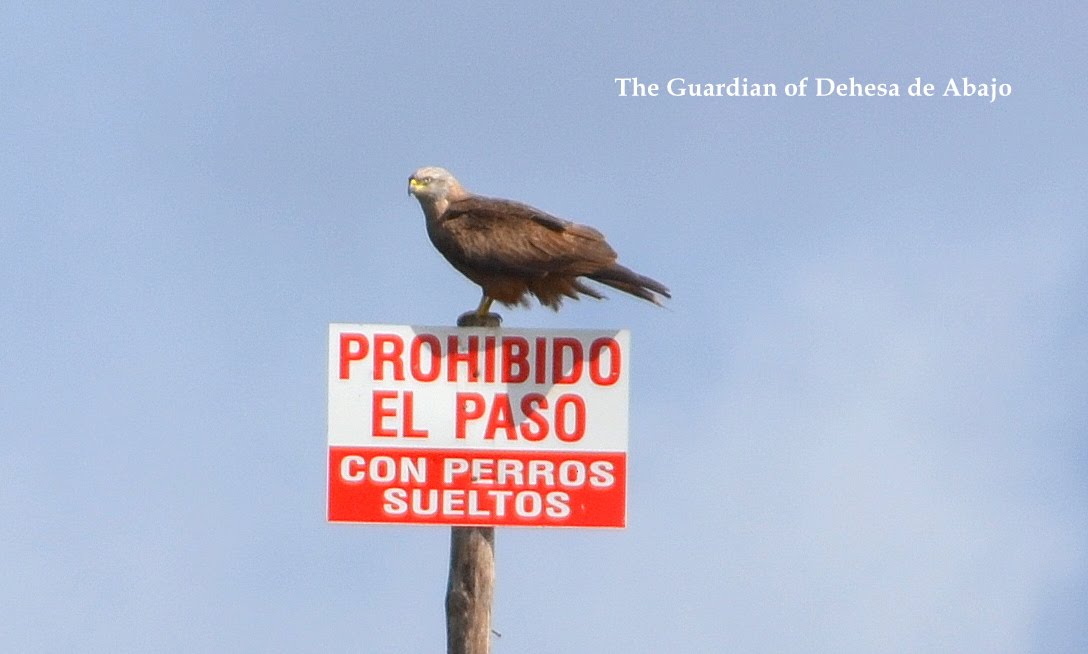

 For the first time we also took a short trip to the rubbish dump at Los Barrios to look at the Black Kites and White Storks. Some say up to 2000 Black Kites have been spotted there at the same time. We had lots, but not that number...
 At the last day, we visited an area I havent seen before, Isla Christina between Huelva and the border. The salt-pans there held the same birds as such areas everywhere; Avocets, Black-winged Stilts, Flamingoes and Slender-billed Gulls. In addition, there were some good flocks of waders, dominated by Dunlins and Common Ringed Plovers.


