Showing posts with label Birdwatching Spain. Show all posts

Friday, 21 December 2018

Cadiz Province december 2018

Tarifa and other parts of Cadiz Province 14th- 18th. of December 2018

I had my "annual" december trip to the Tarifa area to do some birding and avoid the x-mas planning at home. The weather was nice with temperatures from about 10C in the morning up to 18C during day time. I arrived late evening of the 14th and stayed at the Arte Vida hotel just outside Tarifa. It is located close to the Los Lances beach at low cost. So this is a good choice if cost matters. The next three nights I stayed at the Dos Mares hotel close to Arte Vida. Dos Mares is my favorite, but I really recommend the
View from my room at Dos Mares
bungalows at the first row with sea view. I have stayed many times there.


On the 15th I started at Los Lances beach, then drove up to La Janda, continued via Benalup up to Laguna Medina. From there i drove via Jerez to the lagunas along the Camino Colorado, up to the saltspans of Bonanza and last stop at Laguna Tarelo, before driving all the way back to tarifa.

Los Lances had the normal species on this time of the year, with Sanderlings, Dunlins, Common Ringed Plovers, Sandwich Terns and some
Audouins Gulls
Audouin's Gulls. At La Janda, the water levels had gone down lately, so birds were not so close to the main channel and gravel road as they can be. But again, you get impressed by the huge numbers of wintering Cranes and White Storks. A Bluethroat landed just in front of my car. In stead of driving through La Janda I returned back and headed to Benalup and the rice fields below the town. Many White Storks, Cranes and Glossy Ibises here also, and a big surprise for me was a wintering Gull-billed Tern. And a flock of 8 Purple Gallinules.

Eared Grebe, laguna Medina

Laguna Medina was a nice surprise with good numbers of ducks, grebes and coots. The laguna has suffered from introduced carps over the years, but now it seems to be restored. I had more than 50 Eared Grebes, the same amount of Little Grebes and over 100 White-headed Ducks! I then headed up to the Bonanza Salt-Pans, but as previous years I found it rather bird empty. Next stop was Laguna Tarelo. Also here about 10 White-headed Ducks, and also an unusual species; Tufted Duck. There were also several herons and egrets at the far side, at least 5 Black-Crowned Night Herons and 2-3 Squacco Herons. Next and last stop was the small lagoons in the small Camino Colorado. This is supposed to be a safe place for Marbled Duck, but I did not find them, so also here the White-headed Ducks were the stars. 


Barbate Marshes and Saltpans
On the 16th I stayed in the Tarifa area with some short trips up to La Janda and Barbate. At La Janda I had a couple of Black-winged Kites and up to 40 Griffon Vultures. The Barbate marshes were not full of birds, but at least a flock of 20 Audouins Gulls and I also counted 35 Eurasian Thick-knees. I also got a new Spain tick, as I had a Red-breasted Merganser there.


Laguna Grande, Guadalhorce
On the 17th I did much of the same route as the day before, wich made me add species like Lesser Short-toed Lark at Los Lances, Scopolis Shearwaters in the Strait and 2 Caspian Terns at Barbate. on The 18th it was time to start the drive back to Malaga and departure for Norway. However, I also planned for a couple of hours at the Desembocadura del Guadalhorce, which is the estuary just south of the airport. In fact, according to Ebird, this is the place in Andalucia with most species seen; 291 in total. I had 75 Shovelers, Pochards, 20 Shelducks, 15 Eared Grebes, a Booted Eagle, and several Monk Parakeets. To name some of them.


Booted Eagle


To sum it up. I had 112 species during these 4 days. I can really recommend to visit the Cadiz province for birding during winter. There are so many good sites hosting both resident and wintering birds and these sites are close so you do not need to waste time on to much driving. It is also off season so except for the kiters at Tarifa, you can have places for yourself.

Full species list here.

Monday, 24 September 2018

Tarifa and the Strait of Gibraltar September 2018

Short trip to Tarifa 19th-22nd of September 2018

Short-toed Eagle
We had the annual autumn trip to Tarifa for raptor and stork migration. The weather was unusual hot, with prevailing Levante, meaning warm easterly winds. At times the wind was very strong, which prevented migration for many raptors. In addition the typical haze that comes with the Levante made it impossible to see the Moroccan shore at times. 

The result is that you get a lot of raptors, especially Short-toed Eagles, congregating in the Tarifa area. At one time, I had almost a hundred Short-toeds soaring together without migrating. At times they get very low when coming in from the sea after having failed to cross the strait.

Short-toed Eagles can go very low over the terrain when coming in from
 the sea after an attempt to cross
The other raptor dominating the third week of September is the Booted Eagle. They can be seen everywhere. I counted hundreds every day, however many failed the crossing and came in again so double-counts is a real problem here.

In addition to the two dominating species, there were still numbers of Black Kites and Honey Buzzards, where the juveniles were most numerous among the latter. As for harriers, there were some Marsh Harriers and very few Montague's. Of them, I had one black morph. As for storks, there were only Black Storks migrating, where one flock of about 200 was impressive.

Juvenile Honey Buzzard
So where to locate yourself under the Levante? Well, the Cazalla watch point is where you get best overview, but birds tend to go high. So my advise is to drive down to the CIMA center (Fundacion Migres Center) close to the sea. Here you can have close encounters with the raptors both in autumn and in the spring. If you have westerlies, however, the Algarrobo watch point close to Algeciras is to prefer (horrible "road").

Birdwatching in Tarifa can be really hard...
We usually stay at a hotel when in Tarifa. This time we in stead rented an apartment close to the beach and the city center. This proved to be excellent. I could watch raptors in the air from the terrace and out on the sea shearwaters, gulls and terns could be watched at the same time. Given this, you can also enjoy the convenience in having refreshments nearby!


Saturday, 31 March 2018

Huelva and Cadiz Provinces Easter 2018

Faro-Coto Donana-Tarifa round trip

As Faro is close to Coto Donana, we chose that airport rather than Malaga, which we always use when going to Andalucia. You will use about one hour to the Spanish border, and then you can start birding in the Huelva province straight away.

Our first stop was in El Rocio, the heart of Coto Donana. As I have been there several times before, it was quite easy to compare to previous trips. And the first impression was a rather full lagoon, with little birds. Of course, the usual stuff with flamingoes, White Storks, Glossy Ibises and Spoonbills. Of ducks, I noted Shovelers, Gadwalls and Teals.  But, it was few african migrants, meaning no warblers, pratincoles, marsh terns or Bee-eaters and few swallows and swifts. During the trip I spoke with a lot of people and all said the same thing. It is an extraordinary late spring. Some talk about a month late.

Anyway, after a night in El Rocio, we went up to Dehesa de Abajo. This is a really nice area. Perhaps a bit zoo-like, for some people, as the large populations of White Storks and Black kites breed so close and everywhere. But, that is the charm of this site. Further, the lagoon was full with water, and thus promising a good season for water birds. As it was rather windy, most of the water birds gathered on the opposite side, so identification was a bit difficult. We noted Red-crested Pochards rather close.

We then went down to Tarifa and spent three days there. As the whether had been rather poor for several weeks, I was expecting a massive migration over the Strait, since the whether now was improving. But that was not the case. Most probably, the constant north-western winds over a long periode would have halted the migration also well into Africa. Anyway, the raptor migration was going on all days. Staring a bit late, and continuing well into the evening. As the winds were mostly westerly, Punta Carnero was by far the best. Hundreds of Black Kites and Booted Eagles came in there. However also around Tarifa there was visible migration with White Storks, the occasional Black Stork, Booted Eagles, still some Short-toed and some 2-3 Montague's Harriers per days. One day up to 5 Egyptian Vultures also appeared. However, where were the hirundines, swifts and Bee-eaters?

Along Los Lances, I noted the first Northern Wheatear, Yellow Wagtails and Short-toed Larks. Also the usual masses of gulls including Audouins and Caspian Tern.

For the first time we also took a short trip to the rubbish dump at Los Barrios to look at the Black Kites and White Storks. Some say up to 2000 Black Kites have been spotted there at the same time. We had lots, but not that number...

On the detour we went back to Donana and stayed at a four star in Matalascanas. In Laguna Madre, I finally had about 15 Pratincoles, so at least some migrants were on the move. And as always, the Azure-winged Magpies in El Acebuche is worth a visit there.

At the last day, we visited an area I havent seen before, Isla Christina between Huelva and the border. The salt-pans there held the same birds as such areas everywhere; Avocets, Black-winged Stilts, Flamingoes and Slender-billed Gulls. In addition, there were some good flocks of waders, dominated by Dunlins and Common Ringed Plovers.

Some final words: Due to the whether conditions over Europe in March, a lot of rain has fallen in Southern Spain. This is very welcomed. Lagoons and marshes are quite full, and the same goes with the Embalsas. So even though the spring is late, the state of the wetlands of Andalucia gives hope for a good breeding season.

Saturday, 10 December 2016

Coto Donana december 2016

Coto Donana december 2016

Laguna de las Madres, the mother of marshes, at El Rocio.

I have been to Coto Donana several times, but never in december. Donana has always been famous as a wintering quarter for Northern European birds, so it was about time to see the importance with my own eyes. And I was lucky. The area was teeming with birds. (except for, in fact, Laguna Madre seen on the photo above...).


Little owl
The main reason for seing birds everywhere, was the heavy rain that has been pouring down for the past week. The marshes has not been so wet for 6-7 years. It also meant, however, that several of the roads in the area were not driveable or even completly blocked by masses of water. It was no problem for me. The first day I drove on the dykes of the northern marshes, from Vilmanrique de la Condesa towards Isla Mayor. The second day I was together with José Antonio Sánchez from Discovering Donana, and we were able to go into the closed area between El Rocio and the Jose Antonio Valverde center, through Coto del Rey, Hijonos, La Vera and Lucio del Lobo.

On day one, in the northern marshes, I was struck by the total number of birds, including thousands of gulls, hundreds of white storks and glossy ibises, egrets and herons and large distant flocks of ducks. I was driving along the Brazo de la Torre/Entremuros on the western dyke. However, it was not possible to get over to the rice fields on the other side; the road to Isla Mayor was blocked by water. Due to the high water level, it meant that a lot of birds were sitting along or on the dyke. I had 4-5 Black-winged kites, sitting or flying next to my car as an example.


Floaded track in the Coto del Rey pine forest
Day two- with calm, sunny and warm weather, we drove from El Rocio and east towards the Valverde visitor center. On the way we had Iberian grey shrike, Little bustards, Pin-tailed sandgrouses, Stone curlews and lots of Greylag geese, cranes and white storks. The Valverde center gave little, except for some flamingoes. However, after the coffe break going further east, It got exciting again with five Short-eared owls, a Barn owl and totally 4 Little owls. On the raptor side, there were 20 or more Lesser kestrels, two Hen harriers, a lot of Marsh harriers and a wintering Short-toed Eagle. 


Little egret
To summarize, I can really recommend going to the Donana in december. I have been there three times earlier in the spring, and one in the autumn. But to enjoy it in winter is something special. Remember that the Coto Donana partly was protected after pressure from organisations like WWF, for its importance for wintering birds from Northern Europe. Let us hope it can stay that way. One little contribution can be to be a visitor in the "low season" of december and january. It is worth it!
More photos here

Monday, 2 November 2015

Birding Aragon steppees and the Pyrenees

Aragon and the Pyrenees in May 2015

El Planeron on the steppes of Aragon. Foto: Odd Kindberg.
I was acting as a guide for a group of 12 Norwegians travelling with NOF Travel to the aragonese plains and the Pyrenees. We cooperated with Josele Saiz at Boletas Birwdwatching Centre. Josele is highly recommended if you need professional guiding in this part of Spain.

A good point of departure when going to Aragon and the high-Pyrenees is Barcelona. I have taken this route several times. By doing that, you can visit the steppes of Aragon, you can see Zaragoza and then head north for Los Pirineos. And, of course stay a day or two in Barcelona- and if you are very keen drive down to the Ebro Delta as well.

The aragonese part of the Pyrenees, perhaps together with the eastern part of Navarra, is the most interesting as for birding in the mountain range. On this tour we concentrated on steppe birding in the Belchite- El Planeron area, birding in the lower Pyrenees and finally up in the higher areas for some of the key species there. On the steppes, we got the key species like Dupont's Lark, Pin-tailed Sandgrouse and even a Great Bustard- one of the few remaining here.
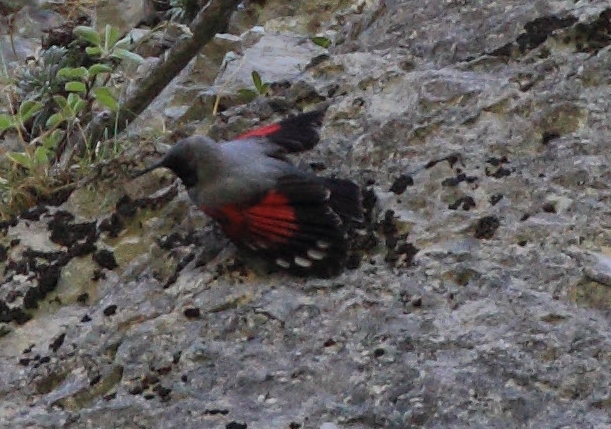
Yes, we found the Wallcreeper! Foto: Odd Kindberg 
In the Pyrenees, we stayed in the small town of Siresa, an excellent choice. It is situated in the Hecho Valley, where you can drive all the way up to Selva de Oza and also easy access up to Gabardito. As one of the star birds of the Pyrenees- the Wallcreeper no more breeds at Boca del Infierno, Gabardito is the most reliable place.

To get the one of the other star-birds of the Pyrenees, we went up the Roncal Valley, into the region of Navarra. Still into May, there were patches of snow here. We drove all the awy up to the French border, and started walking there. In this area, we had two other highlights; close contact with both Lammergeier and Alpine Accentor. The lammergeier had a marvellous show, dropping a bone to crush it on the rocks below. It was doing so several times on close range. Wow, what a show!

The lammergeier is a scavenger, a vulture, that you can find both in Asia and in Africa. But in Europe, however, they have been on the brink of extinction for decades. In Spain, they have been surviving in the Pyrenees, and they have also been re-introduced to other parts of Spain, like up in the Picos de Europa and also in Cazorla in the north-eastern corner of Andalucia. It is for sure one of the most charismatic species to be found, Huge, with up to 2,5 meter wing span, living in remote areas, often gliding along the ridges in the mountains, continously looking for dead animals or remains of it. It is the only bird that specializes in feeding on marrow, which it get's through dropping bones from the air on to rocks below.

You can see more pictures here:

Saturday, 31 October 2015

Ruta de Don Quijote and Ruta de los conquistadores

Easter in Castilla- La Mancha and Extremadura 2015

Toledo was a visit worth. Foto Per S.
My wife and I travelled in the foot steps of both Don Quijote and to the core area of the Spanish conquistadores. I have been in this area several times, but chose a slightly different route, starting in Madrid, down to Toledo, continuing through Parque National de Cabaneros, via Medellin, Merida, Trujillo and last stop at Oropesa. 

I had never been to the Cabaneros earlier, so it was nice to see it; this vast area of unspoilt dehesa with a lot of wildlife and a very good place for Spanish Imperial Eagle. The day after we went to see the village of Medellin- perhaps more known to be the drug capital of Colombia, but in fact in Spain it is the birth place of Hernan Cortes- who went to what is now called
The castle in Medellin. Foto: Per S
Mexico.We then drove through one of the most spectacular landscapes of Spain, the vast plain called La Serena. This is probably Europe's biggest steppe. The soil is not useful for farming, so it is mainly used for cattle and sheep. This means it is excellent for birdlife, with very good numbers of bustards, sandgrouses, larks, Montague's harriers and even a species like Roller. This time of the year La Serena is also covered with low and colourful vegetation. This is a must see when in this part of Spain.


La Serena, Extremadura.
After La Serena, we continued into Merida, especially known for it's roman ruins. However, during Easter this is also a very crowded and noisy city. And the Easter parade here was really something. The river Guadiana flows through here, which makes it quite good for birding, with heronries close to the city center. Anyway, of the cities of Extremadura, I like Caceres and Trujillo better.

From Plaza major, with the Pizzaro statue in Trujillo,
Extremadura.
From Merida we went to Trujillo- the birth place of Francisco Pizzaro- who conquered the Incan empire. This small and old city is a must see in Spain. It is a special atmosphere here, and also noteable is that you constantly will have White Storks, Lesser Kestrels and vultures overhead. Trujillo is also the gate from the south into Monfrague, the perhaps most known area in Extremadura for birdwatching.

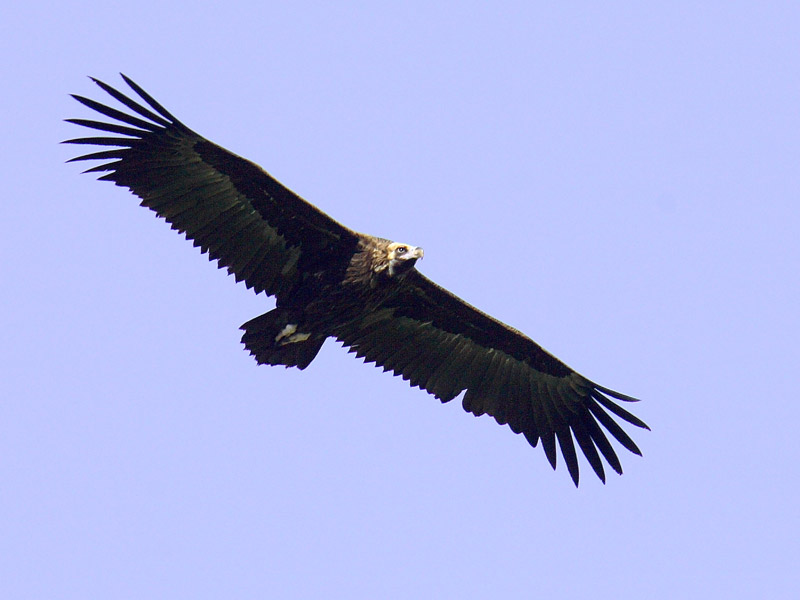
Monfrague is situated along the river Tajo, and is surrounded by dehesa. It is very wild-rich and is host to a hugh number of raptors. Griffons, Egyptian and Black Vultures are common here. In addition you will find several pairs of Short-toed, Booted, Golden and Spanish Imperial Eagles. And, the good thing here is that you get very close so some of the cliffs they are breeding.
Griffon Vulture in Monfrague.


We ended our trip in Castilla La Mancha and Extremadura by staying overnight at the lovely parador in Oropesa. The parador that earlier was the house of the nobles, from where Francisco de Toledo came who was crowned as viceroy of Peru. I would really like to recommend this parador. And, from your window you will have very close contct with the Lesser kestrels breeding there.


Lesser Kestrel, Oropesa. Foto: Per S.

Tuesday, 29 September 2015

Barcelona and the Ebro delta December 2014

At Camp Nou
Our family decided to celebrate at our parents home in Alfaz del Pi, Alicante province. I departed some days ahead and arrived in Barcelona. I enjoyed Barcelona playing at home on Camp Nou, and the day after headed towards the Ebro-delta. The delta is about 200 km south of Barcelona and is by far the most important wetland on the Med Coast. I had just been there once before, on the northern side of the river. This time I has hired a guide, Jaume Soler Zorita from Audouin Birding Tours. We met in Poblenou- where I also stayed overnight and started birding. Jaume was excellent.

Plowing of rice fields make a fiesta for the egrets and herons.
What was a bit irritating was the fact that it was hunting day in the Ebro wetlands, which meant that birds were disturbed. According to Jaume hunters were allowed to hunt Coot's once a year, and that was today...Anyway, we drove out of the hunting zone and visited rice fields and wetlands bordering the sea. The rice fields were dominated by egrets and herons; Cattle Egret, Little Egret, Great White Egret and Grey Heron. Another dominating species out in the wetlands were Greater Flamingo. Together with the Laguna de Fuente Piedra in Andalucia, Delta del Ebro is the most important breeding site for this species. The delta is also the most important site for Audouin's Gull in Europe. They are common here, in addition you will find Mediterranean Gull, Slender-billed Gull, several species of terns and in winter many arctic waders wintering.
Little Egret; common in the Ebro delta
The most unusual Jaume and I had this day was anyway a Great Northern Diver (Gavia immer). It is very rare in Spain, and I had never had it before here.

The Ebro delta is a huge area which means you should stay here at least a couple of days. It is however difficult to work and easy to get lost on all the small roads and tracks. I would really recommend that you hire a guide here. As for accomodation, I stayed in Poblenou situated next to the lagunas El Clot and Tancada and alo close to the sea. For birders, I think this is an ideal staring point. Remember, there are also excellent beaches here, and you can also do sea watching for shearwaters and gannets. Next time I go here, it will be late spring when still some migration is going on and all the breeders are back.

Wetlands near the coast in the Ebro Delta

Thursday, 24 October 2013

Andalucia september 2013

NOF Travel to Southern Andalucia 18.- 23.september 2013

Raptor watch at the Mirador del Estrecho
I was a guide for a group of 12 norwegian birdwatchers, organised by NOF Travel.  We cooperated with Plegadis v/ Sergio Gonzalez Asian. We had 156 species during the 6 days we spent there. The route was about the following; We arrived at Malaga, drove down to Tarifa and spent 3 days there. We then drove north up to Laguna Medina, Brazo del Este and to La Jantejuela. On day five we visited Zaframagon and Laguna la fuente Piedra. Finally, we had the last night up in the Antequera area, before departing from Malaga again

As for raptor migration, we had a good movement on the 19th both at our stop at the Mirador del Estrecho, between Algeciras and Tarifa, and from Cazalla. About 200 Booted- and 150 Short-toed Eagles. In addition there were Black Storks, Montague's harriers and some Egyptian Vultures. Highlight was however three Spanish Imperial Eagles that we could see from Cazalla. 

Short-toed Eagle migrating towards Africa. Photo: Per S.
On the  20th we visited both the Barbate marshes and La Janda. At Barbate we had a Black-winged Kite, 5 Stone Curlews and several Caspian terns. Later in the day we had many Glossy Ibises at La Janda, the first and only Collared Pratincole of the trip and in fact also a Little Swift.

On the 21st, we started in Laguna Medina and had the usual stuff there, including Purple Swamphen and Red-knobbed Coot. Brazo del Este was however a disappointment, with about 1000 Glossy Ibises as the most remarkable. La Janteuela was however more interesting. At the dams in one of the villages we had in fact another Red-knobbed Coot, and that was the first sighting here ever! Out on the steppes we had 11 Great Bustards, 12 Black-bellied Sandgrouses and another Black-winged Kite. We stayed overnight in Montellano.

Group photo at Laguna de fuenta Piedra.
On the 22nd, we walked through Zaframagon. Lot's of Griffons, another swift with white rump, Blue Rock Thrush and 2 Bonelli's Eagles. Last day we tried the mountain near Antequera, El Torcal. A nice area, but foggy conditions made the number of species quite thin.


Wednesday, 14 August 2013

Pais Vasco- the Basque Country

San Sebastian and the Basque coast line july 2013

La Concha bay, San Sebastian
I rarely go south of Scandinavia in july, but as my youngest was attending a summer school in San Sebastian, we took a family trip for a visit. I have previously only been to the neighbouring Cantabria, another part of the Costa Verde in Northern Spain, so it was new ground for me. We flew to Bordeaux and drove south through the Basque country on the French side, and then over the border at Irun before entering San Sebastian (Donostia in Basque). 

As expected for late July, the city was crowded and with a lot of nightly activities going on. This is a very touristic place, and a hot-spot for the Spanish on their summer holiday. The climate here along the Gulf of Biscay is much more pleasant than the interior or the Mediterreanen for that matter. The shoreline is probably what makes the city quite spectacular, with long, sandy beaches within the city. We stayed on the eastern side of the Rio Urumea, but as the city is not very big, it is easy to walk over to the other side and continue on the beaches of the bay of La Concha. All in all, I think it was a pleasant experience, taking into account I am not a "city man".

Basque coastline
Another aim for me was to see more of the Basque coastline, so we had a one day drive along the coast, ending at the bay/Ria of Guernica (Gernika). This is the estuary of the Rio Oka, and is seen as the most important bidring area in the Basque country. The area is a mosaic of mudflats, sandbanks, cliffs and pasture. However, this is not suited very much for birding in July; there are to much people both at the beach and in the estuary itself, and for me this would seem more as a hot-spot under migration and for wintering birds.

A basque for a Norwegian
We then drove south, driving through the town of Guernica/Gernika. Most people should have heard of this town; it was bombed by the Germans under the Spanish Civil War and more or less completly destroyed. Based on this, Picasso made on of the most known paintings in the world; Guernica. Sorry to say, we did not find the town very attractive, so we just had a short stop and then drove back towards San Sebastian. I would summarize my impression of the coast line and country side to be a type of mix between Scotland and Switzerland! The green, rolling hills, the cliffs and tidal flats and the houses that seem to be inspired by the Alpine architecture. 

More pictures here

Tuesday, 1 May 2012

The Pyrenees; Ordesa and Benasque

Ordesa and Benasque, june 2009

After an hour steep climbing in the forest, it is a relief
to get to the viewpoint of Valle de Ordesa
The national Park of Ordesa and Monte Perdido is probably the most spectacular part of the Pyrenees, situated around the highest peaks of the range in the region of Aragon. On this trip we had 2 days in Ordesa and one day in the Benasque-area.

Our point of departure was Torla, which I have used before for this area. From Torla, it is just 10 min drive to the entrance of the park, where you can choose different paths/senderos. We chose the route Faja de Pelay- a walk of about 7 hours. The first part of about an hour, is steep upwards in dense woodland. Then, it opens up and suddenly you are at near 2000 meter with a fantastic view over the canyon, with about 6-700 meter down to the valley bottom. The Ordesa valley is really Europe's Grand Canyon.

Cola de Caballo and Tres Sorores
You then follow the well marked path going along the southern side of the canyon, ending about where the waterfalls- Cola de Caballo- comes down from the Tres Sorores and Monte Perdido. These peaks are above 3.300 meters.

The detour is an easy walk in the valley bottom, where you end up again at the car park outside Torla. I would really recommend this route, you will not be disappointed. Especially if the weather is on your side. There was not very much birdlife when we were there, but last time I had both Lammergeier and Wallcreeper here. One species you will have for sure, is Citril Finch which was the most common along the path.

La Renclusa, a starting point for climbing the highest peaks
We then drove east towards Benasque, another hot spot of the high Pyrenees. We drove up to La Besurta and then we walked the short route up to La Renclusa- a mountain refuge which is a starting point if you would like to climb the highest peak of the Pyrenees, Pico Aneto. The natural park here is called Parque Natural Posets-Maladeta. We also drove the road over to the skiing resort of Cerler- a steep and curvy road however. From here you can take the ski-lift if it is open and if you are lucky, you might get Snow Finch at the top.

After the days in the high-Pyrenees, we drove down to the Costa Brava, having a relaxing time in Sitges, some 30 min south of El Prat airport, Barcelona.

More pictures here


Wednesday, 1 April 2009

Birding Southern Andalucia march 2009

Tarifa and Coto Donana 4th- 7th of March 2009


I arrived at Tarifa in very bad and stormy conditions, and stayed overnight there. At the 5th, I drove up to Laguna Medina and then up to El Rocio. On the 6th I was together with Jose Antonio Sanchez at Discovering Donana, and we covered most of Coto Donana during the day. In the evening I drove back towards Tarifa. On the 7th I did some birding along the strait before returning home via Malaga. A short and compact trip.

Some of the observations made:

Laguna Medina

Due to all the rain, it was completely full of water. Nevertheless, I had some very good observations of about 30 White-headed Ducks, several Red-crested Pochards and Shovelers. And, 5 Black-necked Grebes.

Coto Donana

The Laguna Madre at El Rocio was full of birds and I walked along the Paseo Marismeno. Flamingoes, Glossy Ibises, Spoonbills, Little- and Great White Egrets and hundreds of Shovelers, Pintails, Teals and Wigeons. Of waders, I especially noticed the number of Black-tailed Godwits.

On the 6th. we drove directly out of El Rocio towards The Valverde Visitor Center. On the way we had 3 Great Spotted Cuckoos, Little Owl, many waders like Green Sandpipers, Greenshanks, Lapwings, Little Stints, Dunlins, Kentish and Little Ringed Plovers. Just outside the Visitor Center, we had a Red-knobbed Coot; a lifer for me!


At the center there were many Little Gulls, egrets and herons, Red-Crested Pochards and also a male Hen Harrier. From here we went east along the road towards the rice fields. Not so much here, really, but we visited the nesting area of the Spanish Imperial Eagle, and could see one bird on the nest, very distant. From here, we went up to Dehesa de Abajo. That was a very pleasant experience. Hundreds of White Storks and Black Kites breed here, and most of them seemed to be there already. Further, we had 4 Red-knobbed Coots here, huge numbers of Purple Swamphens and several White-headed Ducks. We returned to El Rocio, and I drove down to Tarifa again in the evening.

Tarifa and the Strait


At the 7th of March, I spent the day driving slowly from Tarifa towards Algeciras to see if there were raptors coming in. It turned out to be a rather good day, all though the weather was rather unstable with quite hard westerly wind, so I focused on the eastern side of the strait. It was still a constant stream of Black Kites coming in from the sea with several flocks of 100+ birds. Further, I ended with about 40 Short-toed Eagles, one Booted Eagle, a Marsh Harrier, one Peregrine, 20 Griffons and in fact a Black Vulture.

Tuesday, 3 July 2007

First trip abroad for NOF Travel

Extremadura 19- 23. April 2007

Birding the steppes of Extremadura: Photo: Atle Qvale
We founded NOF travel- the travel agency for Norwegian Ornithological Society- in 2006. The first trip abroad went to Extremadura 2007. In fact, the interest was som big that we had to arrange two trips with just some weeks in between!

I was the guide for the first group of 16 persons, travelling to the promised land. We had 131 species in just three full days, including very good views of the Spanish Imperial Eagle.

The first day, we had the route Belen- Trujillo – Santa Marta de Magasca- Torrejon el Rubio. Already in the early morning pass, in the steppe of Belen just outside Trujillo, we had Little and Great Bustard, Great Spotted Cuckoo and Calandra Lark. 


Black Vulture. Phot: John Martin Mjelde
Just north of Trujillo we had our first stop; this gave three species of vultures, Bonelli's Eagle and lots of Spanish Sparrows. In the Santa Marta de Magasca area, we had 7-8 Montague's Harriers in a field and also a flock of 20 Black-bellied Sandgrouses. We ended our day up at Torrejon el Rubio where we stayed over-night. 

First stop next day was at the castle in Monfragüe. In my mind, a very good place for all photographers. If you stay here some hours, you will for sure get very close opportunities for pictures of griffons and other raptors. In front of Salto de Gitano, the famous cliff just beneath the castle, we had several species, including two Spanish Imperials having some mating-behaviour in the air. Magnificent! Later in the day, we had an even better view of an SIE, in full adult plumage.


Alpine Swift. Photo: John Martin Mjelde
Last day we visited one of the only wetlands of Extremadura; the Embalse de Arroyocampo at Almaraz (close to the nuclear plant). This is part of the dam created by water from both Rio Tietar and Tajo. We had several nice experiences like Little Bittern, Black-crowned Night Heron, Purple Heron and several species of warblers. 

The whole trip was a success, until we met the SAS-bureaucracy at Barajas Madrid. After 1,5 hours in a que to check-in, the two last persons were not allowed to check-in because they according to SAS were to late, and besides the plane was full. For us that had entered the plane, it was obvious that it was not full at all. The two remaining had to stay the night over in Madrid due to very bad service by the airliner.


Friday, 17 August 2001

A short trip-report from my visit to Northern – Spain 13. th- 18 th. May 2000

Itinerary

 14/5: Charter-trip Oslo-Alicante. Left my wife and kids by my parents. Took the night-train from Alicante to Zaragoza. 15/5: Hired a car in Zaragoza. Drove down to the steppe-reserve of Planeron. In the afternoon drove up to Riglos (de Mallos). Further up to San Juan de la Pena and to Jaca. Stayed in a hotel in Jaca. 16/5: Visit to the Citadell in Jaca. Then up through the Hecho-Valley and up to Gabardito. In the evening I drove to Ordesa and stayed overnight in Torla. 17/5: Walk in Parque Nacional de Ordesa. Then started the long journey towards Madrid.  Stayed overnight at a motel not far from Guadalajara. 18/5: Visit to a agricultural area near Alcala de Henares. Left the car at Barajas Airport, and took the train down to Alicante.

15/5 Planeron, Riglos de Mallos, San Juan de la Pena, Jaca

El Planeron in the Ebro Valley of Aragaon
At Planeron, I found the place overlooking the area, mentioned in Croziers book. Here, there were signs and information on the wildife. However, I did not find the reservoirs where the sandgrouses should come in to drink. Later, though, I drove back towards Belchite and took a farm-track which passed by some overgrown pools where I saw some Black-winged stilts. Perhaps this was the place?

Mallos de Riglos
I had around 10 Black-bellied Sandgrouses but no Pin-tailed. I saw all the larks in the area, including Dupont’s. (lots of Calandra’s , Lesser short-toed- and Short-toed) I could see 2-3 of the Dupont’s larks, and a few also sung in the middle of the day! In Norway this species is called ”Nightlark”, but this cannot be the whole truth! I also had a Stone Curlew, some Quails and some Spectacled Warblers.

Planeron was a very interesting area, and I would like to revisit. Perhaps a bit earlier in the morning!

I drove north through Huesca, on the way to Jaca. I stopped near Riglos and watched the huge cliffs. One Short-toed Eagle flew over and a couple of Booted Eagles also. Lots of Griffons were soaring, together with app. 10 Black Kites and 5 Red Kites. It was here I had the only Orphean Warblers on the trip.
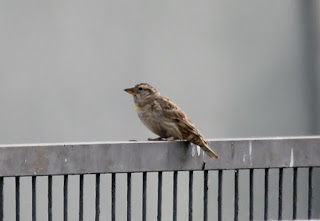
Rock Sparrow
I drove up to San Juan de la Pena to the Monastery. I walked through the wood and got a stunning view over the Pyrenees. From here I saw my first Lammergeier- but at a great distance. Here, I also had the only Honey Buzzard. Smaller birds included Firecrest.


16/5 Jaca, Hecho Valley, Ordesa

Before leaving Jaca, I visited the Citadell. This place is supposed to be a good site for Rock Sparrow- and it is. Perhaps the most common species around the stone walls!

Ordesa National Park, seen from Torla
I drove up through the lovely Hecho Valley. Lots of kites in these areas! First stop the famous Boca del Infierno- the tunnel. My aim was to get the Wallcreepers here. Just after 15 minutes, a pair suddenly arrived. I great experience! (here I also found a Wild Boar in the middle of the road). I then turned back and headed for the Gabardito cross-country resort. Here again, lots of Griffons. One or two Lammergeiers also, and a pair of Egyptian Vultures. Gabardito is mentioned in some trip-reports to be a reliable site for Citril Finch. However, they were not here. I walked up from Gabardito, and reached the alpine meadows. Water pipits, and a Black Wheatear were the best on the ”small front”. However, I found the Choughs and Alpine Choughs most interesting. Not easy to separate in distance, but they have very different sounds. On one of the slopes I also saw some Spanish Ibex.

I then returned through Jaca and headed for Ordesa. Just before Jaca, I had app. 150 Griffons soaring together. The Griffon Vulture seems to be really numerous in this area. Perhaps the highest density in Spain?

I found a hotel in Torla, and took a quick evening trip into Ordesa. I had a Sparrowhawk, a Peregrine and a Golden Eagle from the Information Centre. In this area, I also saw lots of species which are more common further north in Europe, but have their stronghold in Spain here. (tits, finches, dunnocks, thrushes, pigeons..)

17/5  Ordesa, (and drive southwards)

A bit rainy this day. I climbed the steep Senda de las Cazadores on the right side of the river. On the way up, I found a dead Izard/Chamois. I also had two Wallcreepers on the way up. However, I did not make it all the way up. Because of the rain, I turned back to Torla. It then cleared again, and from my hotel I got the best views of Lammergeier on the trip. Two soaring together not far from the hotel, with dense flocks of Choughs/Alpine Choughs just below. I also heard a Black Woodpecker somewhere.

Alpine Chough
I then drove back, and drove up through the Tena Valley and reached the high ground around the French border. A Lammergeier here too and Alpine Choughs pretty close. I also had Blue Rock Thrush and Black Redstarts are common here. Just around the border area I also had Marmots and a flock of Izards.

I drove back and visited the lovely Panticosa ”village”. A Lammergeier , a Black Wheatear, and very healthy waters... Then, the main trip was over, and I headed back. The car was to be delivered at Barrajas, Madrid, so I had lots of miles in front of me.


18/5 In the morning, I visited the area near Alcala de Henares, mentioned in de Juanas book. This area is supposed to hold bustards and sandgrouses. I first visited the church in the village of Meco, where there still are some Lesser Kestrels. Then I drove along a farm track north of the village. I had a lovely male Montague’s Harrier and a pair of Hen Harriers. The latter I have never seen in Spain before. But, do these areas have bustards? If I was on the right track, I cannot see how for instance Great Bustard can survive in such an agricultural area.


I left the car on the airport, and took the Talgo train down to Alicante.