Saturday, 31 March 2018

Huelva and Cadiz Provinces Easter 2018

Faro-Coto Donana-Tarifa round trip

As Faro is close to Coto Donana, we chose that airport rather than Malaga, which we always use when going to Andalucia. You will use about one hour to the Spanish border, and then you can start birding in the Huelva province straight away.

Our first stop was in El Rocio, the heart of Coto Donana. As I have been there several times before, it was quite easy to compare to previous trips. And the first impression was a rather full lagoon, with little birds. Of course, the usual stuff with flamingoes, White Storks, Glossy Ibises and Spoonbills. Of ducks, I noted Shovelers, Gadwalls and Teals.  But, it was few african migrants, meaning no warblers, pratincoles, marsh terns or Bee-eaters and few swallows and swifts. During the trip I spoke with a lot of people and all said the same thing. It is an extraordinary late spring. Some talk about a month late.
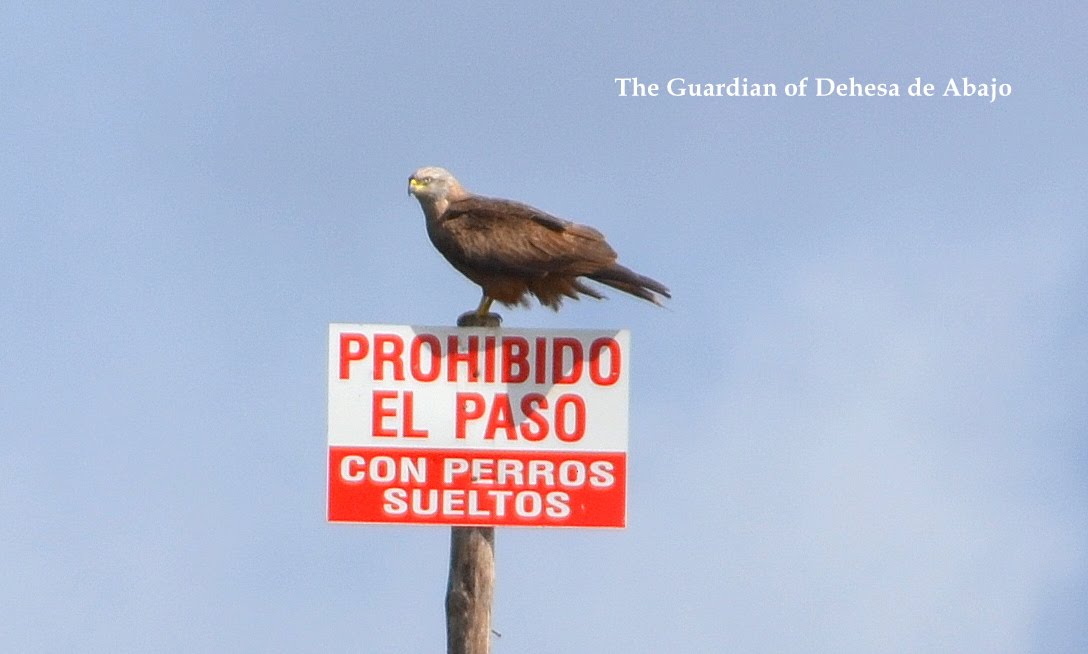
Anyway, after a night in El Rocio, we went up to Dehesa de Abajo. This is a really nice area. Perhaps a bit zoo-like, for some people, as the large populations of White Storks and Black kites breed so close and everywhere. But, that is the charm of this site. Further, the lagoon was full with water, and thus promising a good season for water birds. As it was rather windy, most of the water birds gathered on the opposite side, so identification was a bit difficult. We noted Red-crested Pochards rather close.

We then went down to Tarifa and spent three days there. As the whether had been rather poor for several weeks, I was expecting a massive migration over the Strait, since the whether now was improving. But that was not the case. Most probably, the constant north-western winds over a long periode would have halted the migration also well into Africa. Anyway, the raptor migration was going on all days. Staring a bit late, and continuing well into the evening. As the winds were mostly westerly, Punta Carnero was by far the best. Hundreds of Black Kites and Booted Eagles came in there. However also around Tarifa there was visible migration with White Storks, the occasional Black Stork, Booted Eagles, still some Short-toed and some 2-3 Montague's Harriers per days. One day up to 5 Egyptian Vultures also appeared. However, where were the hirundines, swifts and Bee-eaters?

Along Los Lances, I noted the first Northern Wheatear, Yellow Wagtails and Short-toed Larks. Also the usual masses of gulls including Audouins and Caspian Tern.

For the first time we also took a short trip to the rubbish dump at Los Barrios to look at the Black Kites and White Storks. Some say up to 2000 Black Kites have been spotted there at the same time. We had lots, but not that number...

On the detour we went back to Donana and stayed at a four star in Matalascanas. In Laguna Madre, I finally had about 15 Pratincoles, so at least some migrants were on the move. And as always, the Azure-winged Magpies in El Acebuche is worth a visit there.

At the last day, we visited an area I havent seen before, Isla Christina between Huelva and the border. The salt-pans there held the same birds as such areas everywhere; Avocets, Black-winged Stilts, Flamingoes and Slender-billed Gulls. In addition, there were some good flocks of waders, dominated by Dunlins and Common Ringed Plovers.

Some final words: Due to the whether conditions over Europe in March, a lot of rain has fallen in Southern Spain. This is very welcomed. Lagoons and marshes are quite full, and the same goes with the Embalsas. So even though the spring is late, the state of the wetlands of Andalucia gives hope for a good breeding season.

Monday, 25 December 2017

Birding Tarifa and the Cadiz Province, December 2017

Winter break in Southern Spain, 9th to 13th of December, 2018

I had a short break before Christmas, and what better to do than go to the Tarifa area, as so many times before. I stayed at the Hotel Dos Mares, also as many times before. The view from the front line bungalows there are simply stunning.

On Sunday the 10th, I had agreed with Yeray Seminario at Birding the strait to have a half day at La Janda to look for Spanish Imperial Eagle. And it was a success. We had at least three individuals, 2 adults and 1 immature. At the site for one of the adults, we also constantly had an immature Bonneli's Eagle in view. We also had three Black Storks, four Spoonbills, three Black-winged Kites, two Hen Harriers and some Red Kites. In La Janda, also about 500 Cranes, 300 Golden Plovers and quite a lot of other waders were wintering. In the evening, I walked along Los Lances, and had a nice flock of 17 Audouins Gulls.


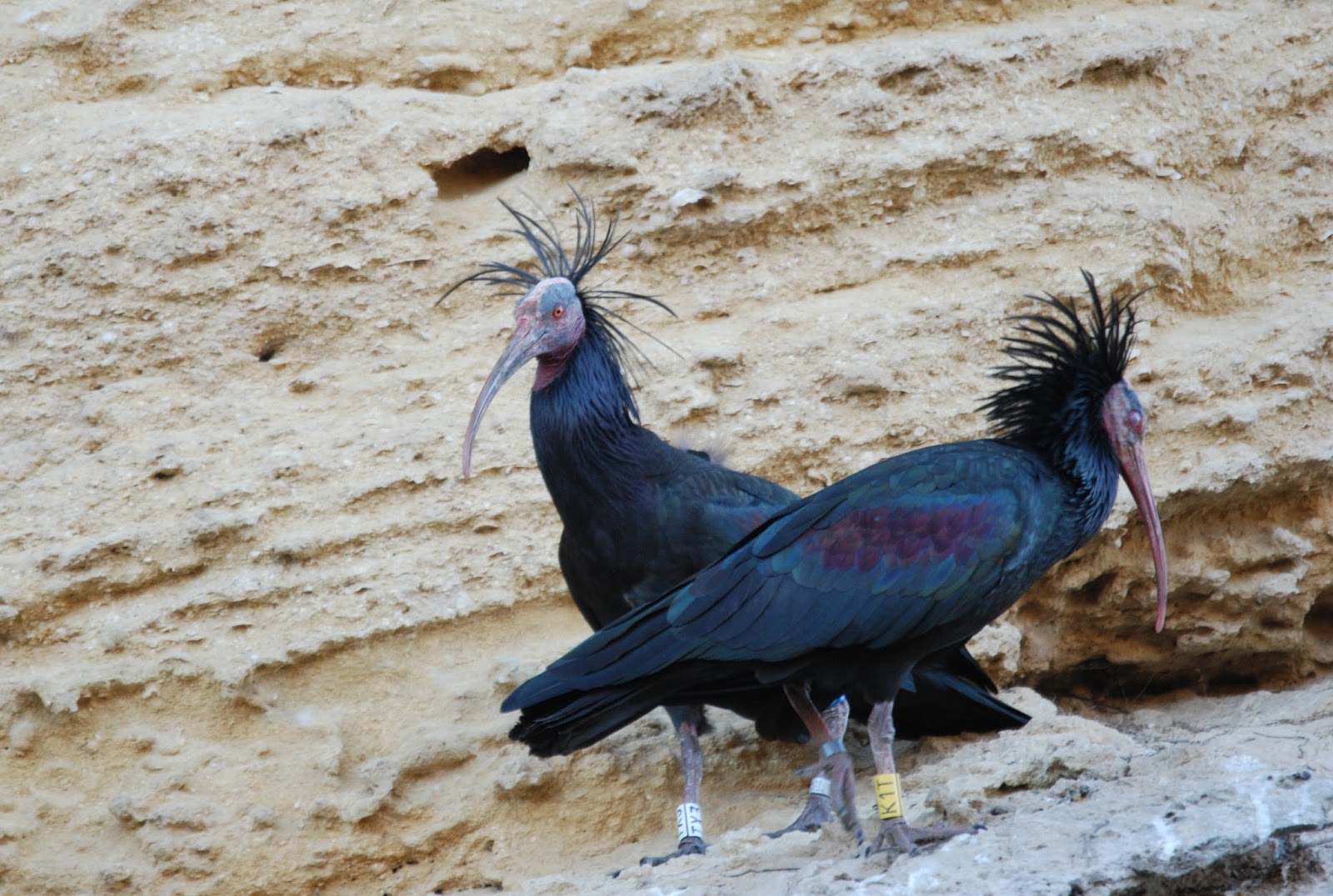
On Monday, it was quite stormy with rain, so I did some property search in stead. I managed a short visit to Palmones estuary, though. 1 Mediterranean Gull was the most interesting. On Tuesday, it had cleared up and I went up along the Costa de la Luz. First, I visited Barbate. There I had about 20 Stone Curlews and about 10 Bald Ibises. It is not far from the breeding 
site at Barca de la Vejer, so this is natural.I then drove up to Chipiona to look for Little Swifts, which in fact winter there. I had none, but a Caspian Tern and a Booted Eagle was ok. Next stop was the Bonanza Saltpans. Due to the rain the day before, I did not drive far into the area, but I drove enough to have Slender-billed Gulls and Flamingoes. Next stop was Laguna Tarelo. This is a very accessible and rewarding small lake, good in spring, autumn and winter. This time I saw Black-necked Grebe, 10 Shovelers, 15 White-headed Ducks, 40 Black-crowned Night Herons and one Little Swift.


By the way, when driving up to Chipona, I chose to go through El Puerto de Santa Maria. And there, in the middle of the round-about, with Burger King as the nearest neighbour- a replica of La Nina... what a place for this historic and world-famous Columbus ship!

On the way back, I encountered a circling flock of about 150 White Storks between Tarifa and La Janda. It might in fact have been the first arriving flock on "spring migration" as many leave Spain already in July and will start to return already in January- so why not December...?

Last day was a real mess, as I found out that I had a return ticket for 13th of February and not December..., so the best thing to do was to go to Malaga to sort things out.

More photos herehttps://photos.app.goo.gl/QX4NkaXn0jJHaOTi2


Saturday, 14 October 2017

Raptor watch Strait of Gibraltar September 2017

Raptor and stork migration


Short-toed Eagle.
We had a 5 days holiday from september 21st to sept 26th. Weather was unusually hot, with temperatures close to 30 C, a bit inland. We stayed some nights in La Alcaidesa, some 40 mins drive from Tarifa. The last nights we, as usual, stayed at Dos Mares Hotel, just outside Tarifa.

Due to easterly winds, most of the migration seemed to go at the western end of the strait, thus the watch point at Cazalla was an optimal place. However, in periods, the wind was very strong which meant that many raptors and storks did not migrate, or they returned from the sea. This given, you could have very close encounters as they returned very low over the sea. The new observation center built close to the sea, CIMA,just north of Tarifa was then a strategic place. 

Black Storks
As expected late september, there were four species dominating the air; Short-toed Eagle, Booted Eagle, Black- and White Stork. We had thousands of all these species during these days. Additionally, we had Bonelli's Eagle, Sparrow Hawks and some late Black Kites, Montague's Harriers and Honey Buzzards. I was also lucky enough to get my first sigthing of Rüppels Vulture. 

You can get weekly numbers on the  Programa Migres site here: https://www.facebook.com/FundacionMigres/


There were at times also large numbers of swallows and swifts migrating. We had a couple of really dense flocks of Alpine Swifts and Red-rumped- and Barn Swallows were constantly moving south from early morning.


We usually do some travelling around when we have our annual trips to the Strait in spring and autumn. This time we did not, but mainly stayed close to Tarifa. Of course including mandatory trips to La Janda. Tarifa is reaally and optimal place to combine holiday and birdwatching. Where else can you relax at the seaside and see thousands of raptors and storks overhead? We will be back.

More photos here: 

Video here


Friday, 14 April 2017

Castilla y Leon birding


Castilla y Leon: Spains biggest region with historic cities, "tierra del pan", spectacular landscapes and good birding.


Having visited most of Spains region, it was time to see more of the biggest region of Spain, Castilla y Leon, in the Easter of 2017. This is a highly agricultural intensive area, called "Tierra del Pan", meaning the bread land of Spain.

We started in Madrid, drove to Avila and spent the night there. Next day we went via Salamanca up to the border areas to Portugal, following the river Duero. We stayed overnight in Villalpando, which was a very good starting point for visiting the Villafafila area the next day. Villafafila is known for having the biggest population of Great Bustards in the world. Then, we went up to the scenic village of Sepulveda, which was a good point of departure for going to the Hoces del Duraton the next day. Last, but not least, we went down to Segovia and enjoyed the lovely parador there and did sightseeing in the historic city.


As for birding, I (who is the birdwatcher of us...) focused especially on two sites; Villafafila and Hoces del Duraton. Villafafila has the biggest population of the emblemic Great Bustard anywhere. I started in Vilalpando an hour before sunrise and drove out in the area. Even before sunrise, I could see the first great white "dots" out in the fields, and just a 1 km outside the village. As the light came, I could see single males and groups of females in most of the fields, just looking out of the car window. I guess I had at least 50 in just a couple of hours. As for the lagoons, the most important in this area of Spain, some of them were already dry. So the best was to go on the southern side of Laguna Grande. This was well worth a visit. The abandoned farm has a big Lesser Kestrel colony, Rock Sparrow was abundant, several Little owls were occuping the bird tower and in the fields several Short-eared Owls were hunting. In the lagoon, there were good numbers of Shovelers, Gadwalls, Teals, Wigeons, Black-winged stilts, Avocets, a flock of Spoonbills amongst others. To summarize my visit here: Well worth it!


The other area I wanted to see was the Parque Natural Hoces del Rio Duraton, the Grand Canyon of Castilla y Leon. This canyon has up to 100 meter cliffs and is a breeding site for numerous raptors. First and foremost up to 500 pairs of Griffon Vultures! We stayed in Sepulveda and drove to the small village of Villaseca, and walked the about 6km from there in to the Ermita de San Fruto, the monastery at the cliffs. All the spaniards going there were driving, but as we went early we had the dirt track for ourselves. And what a nice steppe area before approaching the canyon: I had Duponts Lark, Calandra Larks, Wood Larks, Thekla Larks, Tawny pipits, Black-eared Wheatears, Spectacled warbler etc etc. I can really recommend to walk this track in stead of driving which most birders would do. At the cliffs where the Ermita is situated, there were of course a lot of Griffons, a pair of Egyptian Vultures and a Peregrine. I would recommend to stay half-a-day in this area, focusin on the dry steppe at sunrise and stay at the cliffs to look fo raptors and Black Storks when the thermal is rising.


As mentioned earlier, the region of Castilla y Leon has several historic cities. We visited Avila with its famous city wall, Salamanca with is huge cathedral and famous Plaza Mayor and Segovia with it's huge aquaduct. These cities are also at a size which means you quickly can see the most interesting sites. These cities alo have their distinct bird community with Lesser Kestrels, White Storks, Blue Rock Trush and Alpine Choughs.

To summarize the visit to the huge region of Castilla y Leon: Very well worth a visit and also with a very good infrastructure for tourists: Good hotels (like the Paradores), very good food, good roads, abundance of both well known and hidden gems and do not forget the wine district of the Duero valley.

See more pictures here: 

Saturday, 10 December 2016

Coto Donana december 2016

Coto Donana december 2016

Laguna de las Madres, the mother of marshes, at El Rocio.

I have been to Coto Donana several times, but never in december. Donana has always been famous as a wintering quarter for Northern European birds, so it was about time to see the importance with my own eyes. And I was lucky. The area was teeming with birds. (except for, in fact, Laguna Madre seen on the photo above...).


Little owl
The main reason for seing birds everywhere, was the heavy rain that has been pouring down for the past week. The marshes has not been so wet for 6-7 years. It also meant, however, that several of the roads in the area were not driveable or even completly blocked by masses of water. It was no problem for me. The first day I drove on the dykes of the northern marshes, from Vilmanrique de la Condesa towards Isla Mayor. The second day I was together with José Antonio Sánchez from Discovering Donana, and we were able to go into the closed area between El Rocio and the Jose Antonio Valverde center, through Coto del Rey, Hijonos, La Vera and Lucio del Lobo.

On day one, in the northern marshes, I was struck by the total number of birds, including thousands of gulls, hundreds of white storks and glossy ibises, egrets and herons and large distant flocks of ducks. I was driving along the Brazo de la Torre/Entremuros on the western dyke. However, it was not possible to get over to the rice fields on the other side; the road to Isla Mayor was blocked by water. Due to the high water level, it meant that a lot of birds were sitting along or on the dyke. I had 4-5 Black-winged kites, sitting or flying next to my car as an example.


Floaded track in the Coto del Rey pine forest
Day two- with calm, sunny and warm weather, we drove from El Rocio and east towards the Valverde visitor center. On the way we had Iberian grey shrike, Little bustards, Pin-tailed sandgrouses, Stone curlews and lots of Greylag geese, cranes and white storks. The Valverde center gave little, except for some flamingoes. However, after the coffe break going further east, It got exciting again with five Short-eared owls, a Barn owl and totally 4 Little owls. On the raptor side, there were 20 or more Lesser kestrels, two Hen harriers, a lot of Marsh harriers and a wintering Short-toed Eagle. 


Little egret
To summarize, I can really recommend going to the Donana in december. I have been there three times earlier in the spring, and one in the autumn. But to enjoy it in winter is something special. Remember that the Coto Donana partly was protected after pressure from organisations like WWF, for its importance for wintering birds from Northern Europe. Let us hope it can stay that way. One little contribution can be to be a visitor in the "low season" of december and january. It is worth it!
More photos here

Thursday, 7 April 2016

Birding in the Cadiz province march-april 2016

Birdwatching from Dos Mares
We had the annual "spring tour" to Southern Andalucia, both too enjoy some migration over El Estrecho, but also to travel to new places in the Cadiz Province. However, we stayed in the Tarifa area, testing out several overnight possibilities, But as always, we concluded with: Hotel Dos Mares, with a sea view, is the real thing.

Coastal area of Tarifa, along the Colado de la Costa
I would not say it was an impressive migration these days. One day, while walking the newly opened route from Tarifa and west towards Algeciras, we had about 80 Booted Eagles coming in quite low over the sea. In addition, the call from Beeaters could be heard all along the route. 

There were also a good variety of breeders or stranded migrants here, like Iberian Chifchaff, Woodchat Shrike and Black-eared Wheatear.

We had several day trips out of Tarifa. One up to the Chipiona-Sanlucar-La Algaida area. Algaida forest is a very nice area. You can drive through, but I would say a walk along the paths is a good alternative, 

Bald Ibis at breeding site
Another trip we had was up to the Ojen Valley. I drove through here some 20 years ago, and it is still doable, but you need to take care. The road can be challenging, so also here a walk along the road could be an alternative. Last, but not least, we drove up to Arcos de la Frontera, one of the Pueblas Blancas, A nice place, but still, I would recommend Vejer de la Frontera. Another reason for going to Vejer, is of course the nearby colony of Bald Ibis. The only breeding place in Europe!

A couple of other things from the trip should also be mentioned. For the first time, we visited the roman ruins at Bolonia. A nice place, worth a visit. From here we also drove up to the Sierra de la Plata, and stayed under the Cueva del Moro for a while to see whether there were any swifts. Both White-rumped and Little Swift have bred here, but it was anyway to early for the first mentioned. Last, but not least, we enjoyed some good Black Kite migration the last day near Punta Carnero, where flocks came in low over the sea, in western gale and drizzle!
Black Kite at Punta Carnero, 4th of April, 2016

More pictures from the trip herehttps://goo.gl/photos/8pcuZpvAuYjd6kfD6

Sunday, 8 November 2015

Andalucia has everything

Andalucia is the southern most region of Spain, and one of the regions I have been visiting most. But it is a big region, divided into 8 provinces, so you really need time to do Andalucia properly. Andalucia has really as mentioned above, everything; the coast (Costa del Sol, Costa de la Luz), the mountains (Sierra Nevada, Grazalema, Ronda, Cazorla), the cities like Sevilla, Cordoba and Granada. It gives a unique possibility to combine nature, culture and relaxation. It is therefore not possible to give a just presentation on a blog. Let me then just pick a few areas that I enjoy very much and with a birdwatchingperspective.

Coto Donana

Center of El Rocio. Foto: Per S
El Rocio is the centre of Donana, and where most people stay when here. This is a spectacular village with sandy roads, white houses and really giving a "mexican" feeling. If a birdwatcher, see if you can get a hotel with a with over the lagun Charco de la Boca. And, check the calendar before you go to avoid any fiesta in the village.

If you would like to enjoy Coto Donana, you should primarily hire a guide. You need local knowledge and a four-wheel drive. If you are an ordinary tourist, you could just buy into any of the four-hour tours going from El Acebuche. But if a birdwatcher or a person who would like to see the area properly,stay away from that.
Typical Donana landscape. Foto: Per S
When should you go to Donana? Well, I have been here three times; march, april and may. In early march you will still have many winter residents in combination with early summer migrants. In april and may, the wintering birds are gone, but you have most of the breeding species there, in combintion with birds on migration. I think you can go almost at every time and enjoy it, but the drought and summer heat going on long into october should probably be avoided. And, finally, there is a huge difference whether there is water or not. I have seen both drought and floodings here, When really flooded, birds are spread and access to the park proper is difficult. If drought, waterbirds are gone. So check this in advance.

Red-knobbed Coot, Coto Donana. Foto: Per S.
So what species to focus on? Again, it depends on the season. What most people would like to see is of course the Spanish Imperial Eagle. I have not had it here, so I would say that it might be easier in Extremadura. If you have a guide however, they always know about some nests, so they would bring you in the hunting area of the birds. Another star of the area is the Red-knobbed Coot. At least for some years ago, this was the only place on the European continent you could have it, but nowadays this species is re-introduced in many wetlands in Spain.
Dehesa de Abajo in the outskirts of Donana is a place you should go; there are white stork- and black kite colonies here. Foto: Per S.


El Rocio with the Chrarco in front. One of my favourite places in Spain!. Foto: Per S.